My ICLR 2026 and Brazil Experience in Rio de Janeiro
A long route to Rio, a paper presentation at ICLR, and the practical lessons that came with figuring out Brazil in real time.
ICLR, the International Conference on Learning Representations, is one of the most respected conferences in machine learning and is rated A* in the CORE conference rankings. It is the kind of venue that researchers across the world actively target, and getting a paper accepted there is a serious milestone. For me, this was not just a conference trip to Rio de Janeiro. It also carried a different kind of weight since the founding of my department in 2013, no faculty member or student from the department has had an accepted paper at an A* conference, let alone ICLR. That context is what made this journey feel much larger than travel, logistics, or even the presentation itself.
The visa and pre-travel paperwork part is important, but it is also boring to write in detail right now. I might add that separately later. This post starts from the actual journey.
Delhi Airport T3 and the Journey Out
I started from NIT Jalandhar on April 22 at 11.50 in the morning. I took the Indo Canadian bus towards Delhi ISBT Kashmere Gate. This was already my third Delhi trip that month, and of course I managed to forget my printed poster at home.
Somewhere near Pipli, Haryana, I called someone and asked them to print a new poster. He got it printed, came near the bus stand, and handed it to me while I was still on the way. That was the first stressful moment of the trip, and it happened before I even reached Delhi.
I reached Kashmere Gate and had a heavy dinner because I knew the flights ahead were going to be long.
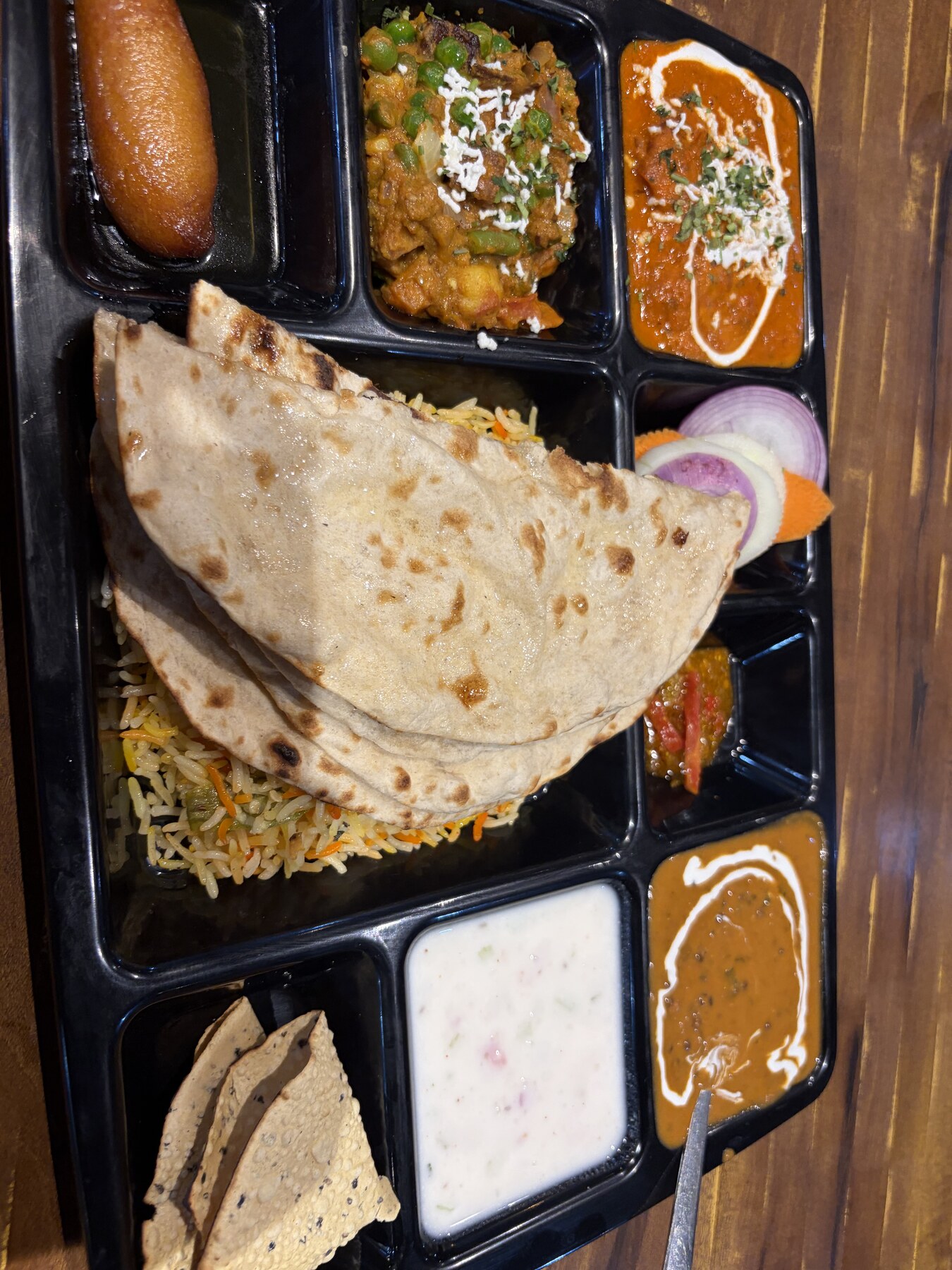
Dinner at Kashmere Gate before heading to Delhi Airport T3.
After that I printed a few extra documents through Blinkit, just to be safe, and went to New Delhi metro station. From there I took the Airport Express line to Terminal 3.
I reached the airport early, which was the right decision. The process was smooth. Immigration at Delhi asked only basic questions, and nothing felt difficult. I was flying with ITA Airways, and overall my experience with them was good, including the boarding process.
One thing I did not expect was getting boarding passes for all three flights from ITA itself. My final domestic flight inside Brazil was operated by GOL, but ITA still issued all the boarding passes at Delhi.
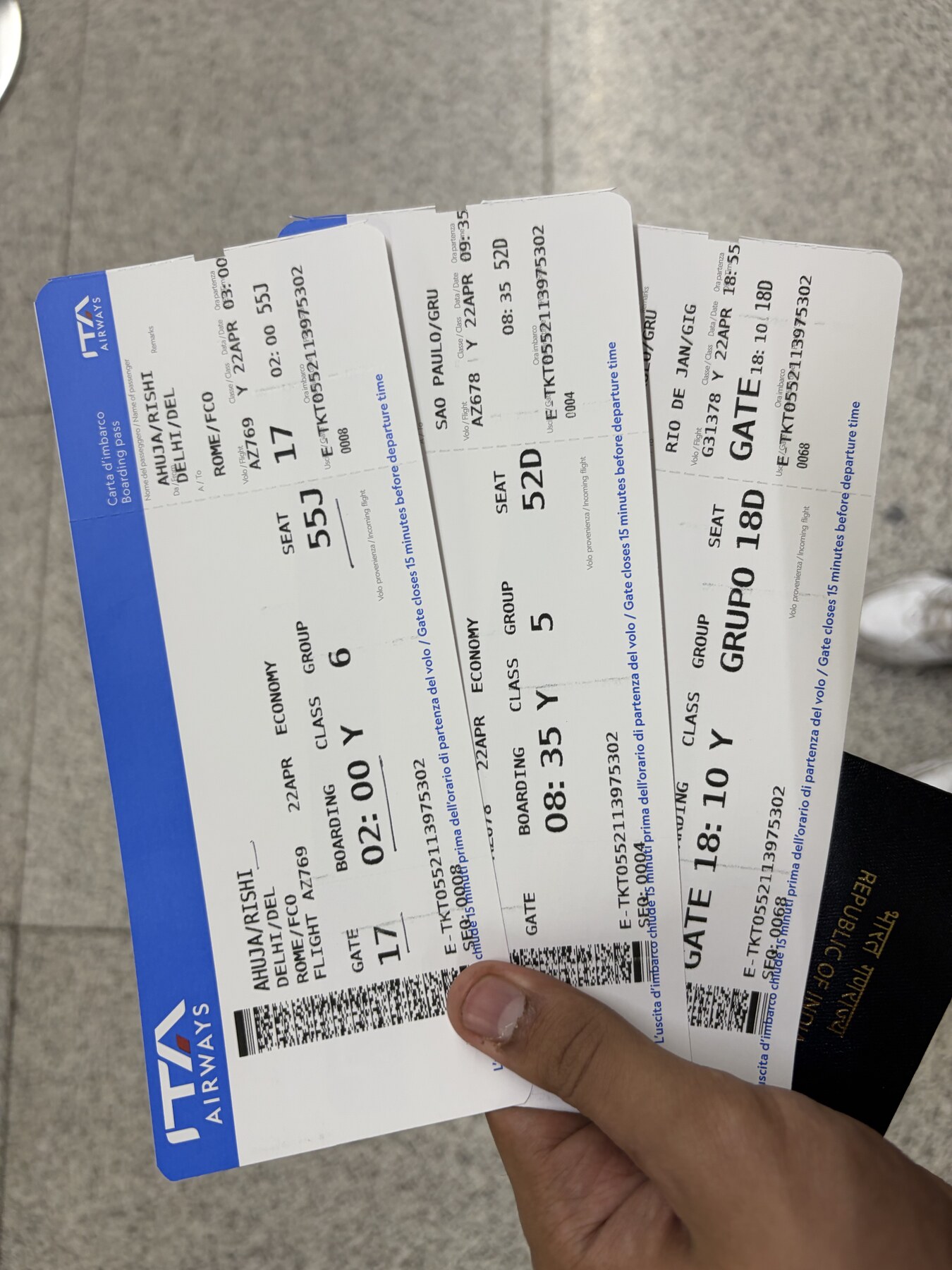
Boarding passes for the Delhi-Rome-São Paulo-Rio route.
At the airport I met several people who were also going to Brazil for ICLR. Nishant, Abhinav, Shubham, and a few others were on similar routes. Nishant was working part-time at IISc and had a poster presentation. Abhinav was with Microsoft Research and had an offer from CMU. Shubham was a final-year PhD student at IISc Bangalore.
Most of the airport conversation was basic introductions, but it immediately made the trip feel less lonely. Abhinav and Nishant were with me until the first flight.
The first flight was to Rome. The flight was slightly delayed, but the seats and food were better than I expected. It was around eight hours long, and we got one meal and one snack. I could spot many Indians on the flight, and some were clearly going to the same conference.
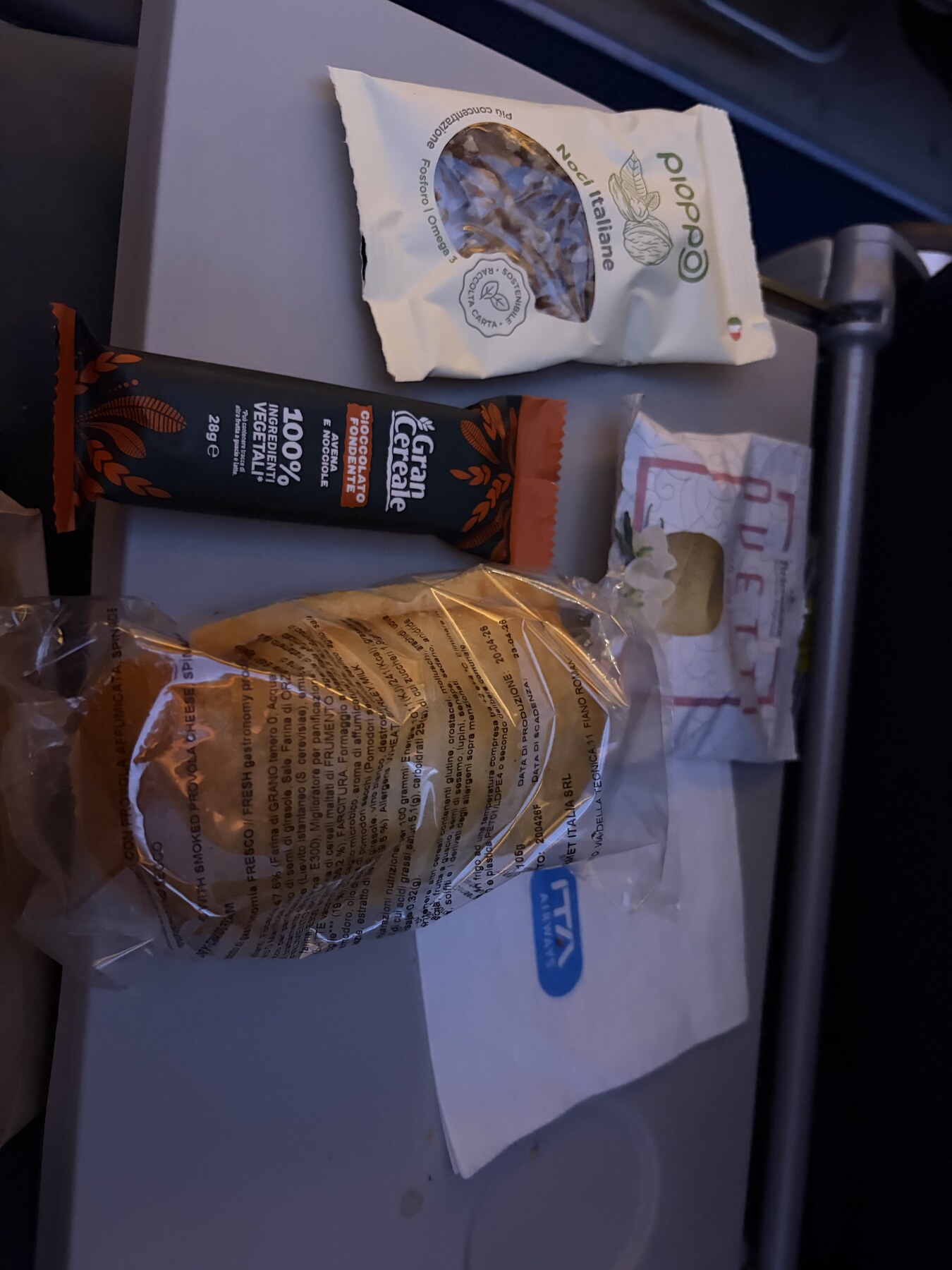
Meal on the first long flight.
The second flight was from Rome to São Paulo. This one was around eleven hours. ITA's food policy said that flights longer than eleven hours get two main meals and one snack, and that matched what we got. Long flights are still tiring, but having food timing predictable helps.
After São Paulo, we shifted terminals, cleared immigration, and moved to the domestic GOL flight to Rio. Brazilian immigration was surprisingly quick for me. The turnaround time was maybe three minutes. The layovers were short but manageable.
The GOL flight was only about an hour, but I was surprised to see that even this short domestic flight had snacks and onboard Wi-Fi. The plane also looked cartoonish in a good way.
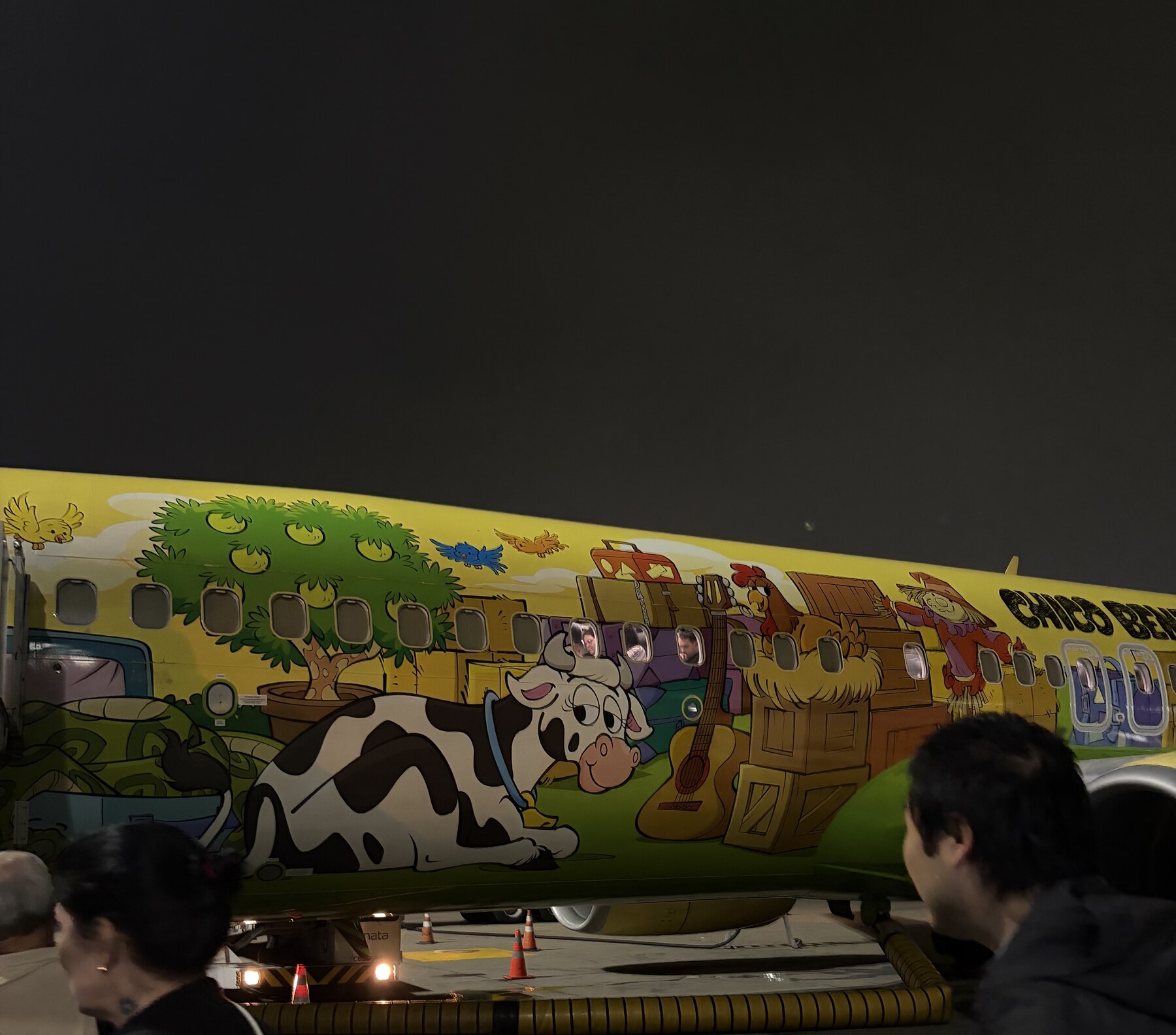
GOL aircraft for the final domestic flight to Rio.
Touchdown in Brazil
Inside the airport, while collecting baggage, I met more people connected to the conference. There were some Sri Lankan attendees, someone from the Apple booth, a Chinese student from Western University, and Rajeev sir from IISER Bhopal. Rajeev sir was a final-year PhD student and one of the sweetest, most helpful people I met during the trip.
Then came the first practical problem, which was money and Uber.
I could not find a convenient place to exchange cash at the airport. I booked an Uber to Ipanema Beach House, but the driver needed either cash or direct payment through the Uber app. To pay through the app, I needed to add my card. To add my card, I needed an OTP. And my Vodafone international messaging was not active yet. It took around three to four hours for that to start working.
This is one of the first lessons I would give anyone traveling internationally from India. Turn on international roaming and SMS before leaving, or set up a working eSIM or alternate number and card payment method in advance. UPI is useless once you step out unless the other person is Indian. Abhinav booked a cab for me, and I paid him later through UPI. The ride cost me around INR 1.5K, and that was the moment I realized Rio transport could get expensive very quickly if I kept using Uber.
I reached Ipanema Beach House. The place was fine and had a hostel vibe. In my dorm there was one French guy and two women from England. I did not interact with anyone much that night. I went to the washroom, realized there were no jet sprays and that everyone used toilet paper, and then slept.
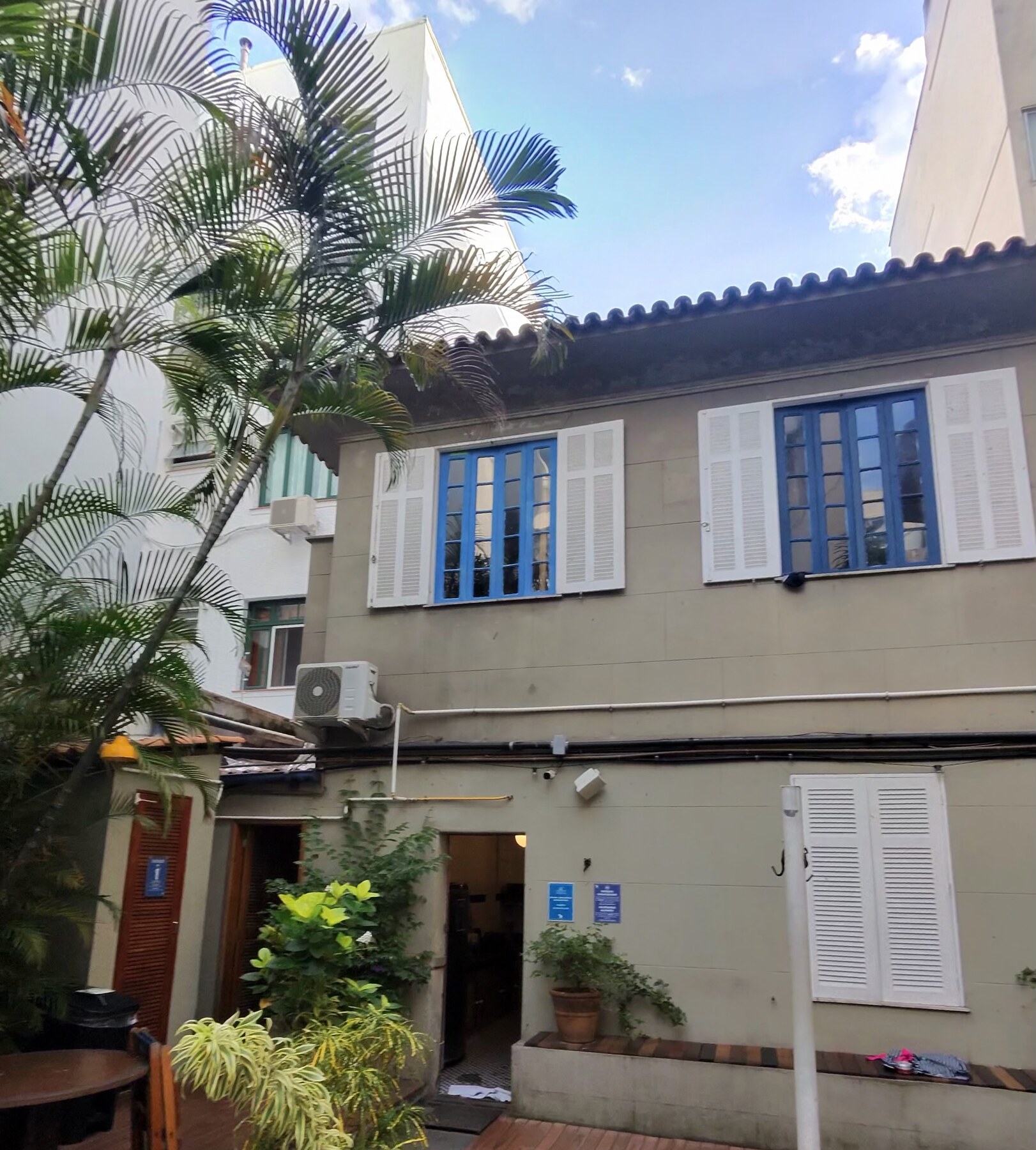
Ipanema Beach House, my hostel in Rio.
I woke up early the next morning, around 6.
One of my biggest first impressions was the language barrier. Almost nobody I spoke to in Brazil knew comfortable English, including many airport and transport staff. My hostel receptionist knew English, which helped a lot, but outside that I had to rely heavily on translation apps. This is not a complaint, just something to prepare for. If you are going to Rio from India, do not assume English will work everywhere.
At breakfast I saw the menu and had to decode basic food words. Chicken is frango, egg is ovo, cheese is queijo. I ate a cheese toast with two slices of bread and cheese inside. It cost around R$12. Tea was basically a tea bag with hot water and cost R$10.
For someone with Indian food habits, especially if you avoid beef or pork, food takes planning in Rio. You can find chicken and eggs, but you have to look carefully. Ham, pork, and beef are common. Vegetarian options exist, but they are not always obvious or filling.
First Day at ICLR
From Ipanema I took an Uber to the conference venue. It cost close to INR 1K, which again made it clear that I needed a cheaper commute option. Still, the ride itself was beautiful. Rio has mountains, beaches, tunnels, wide roads, and sudden sea views in the middle of normal city travel. I reached the venue about twenty minutes late, but the view on the way made the first morning memorable.
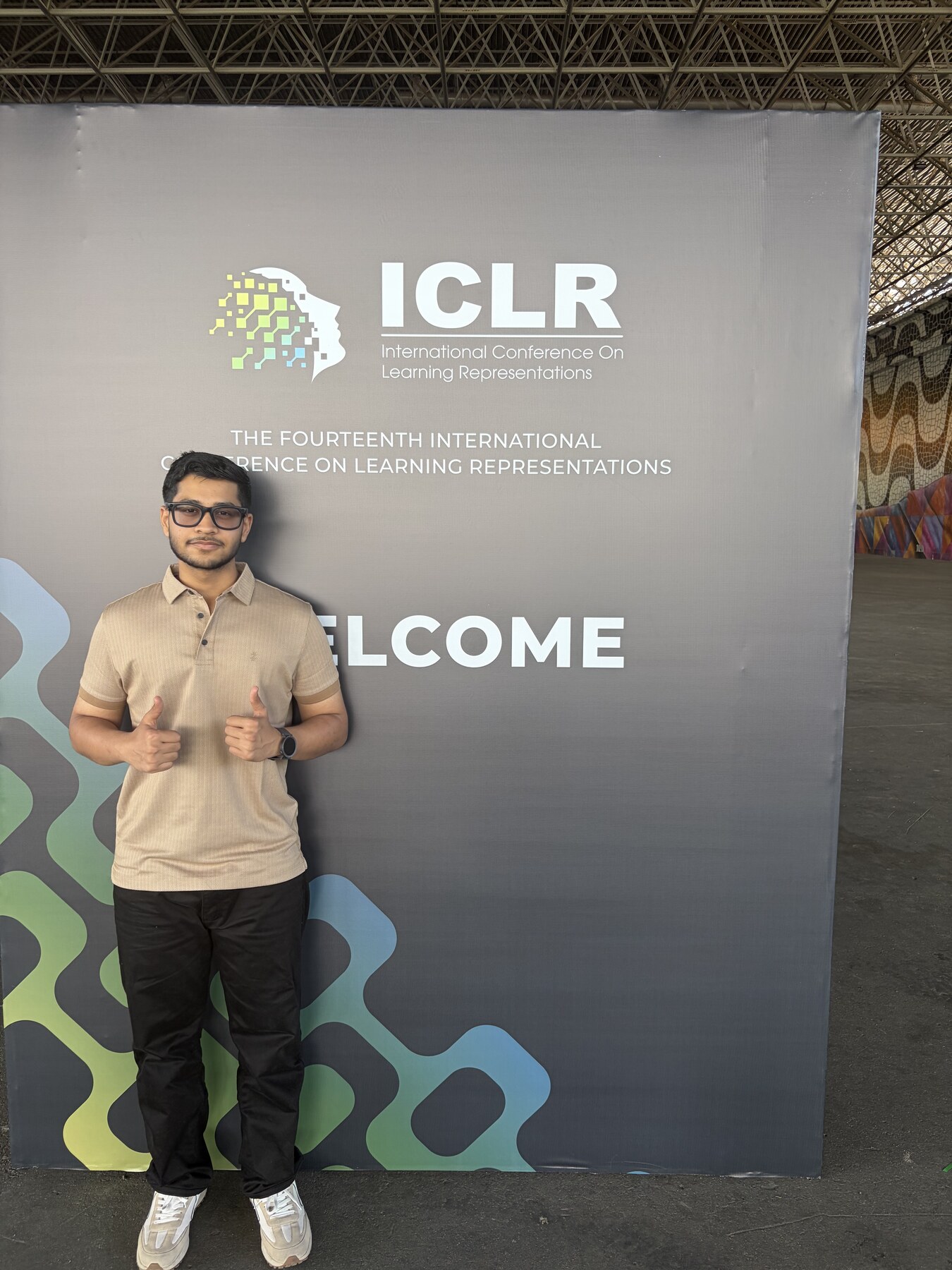
First photo at the ICLR board in Riocentro.
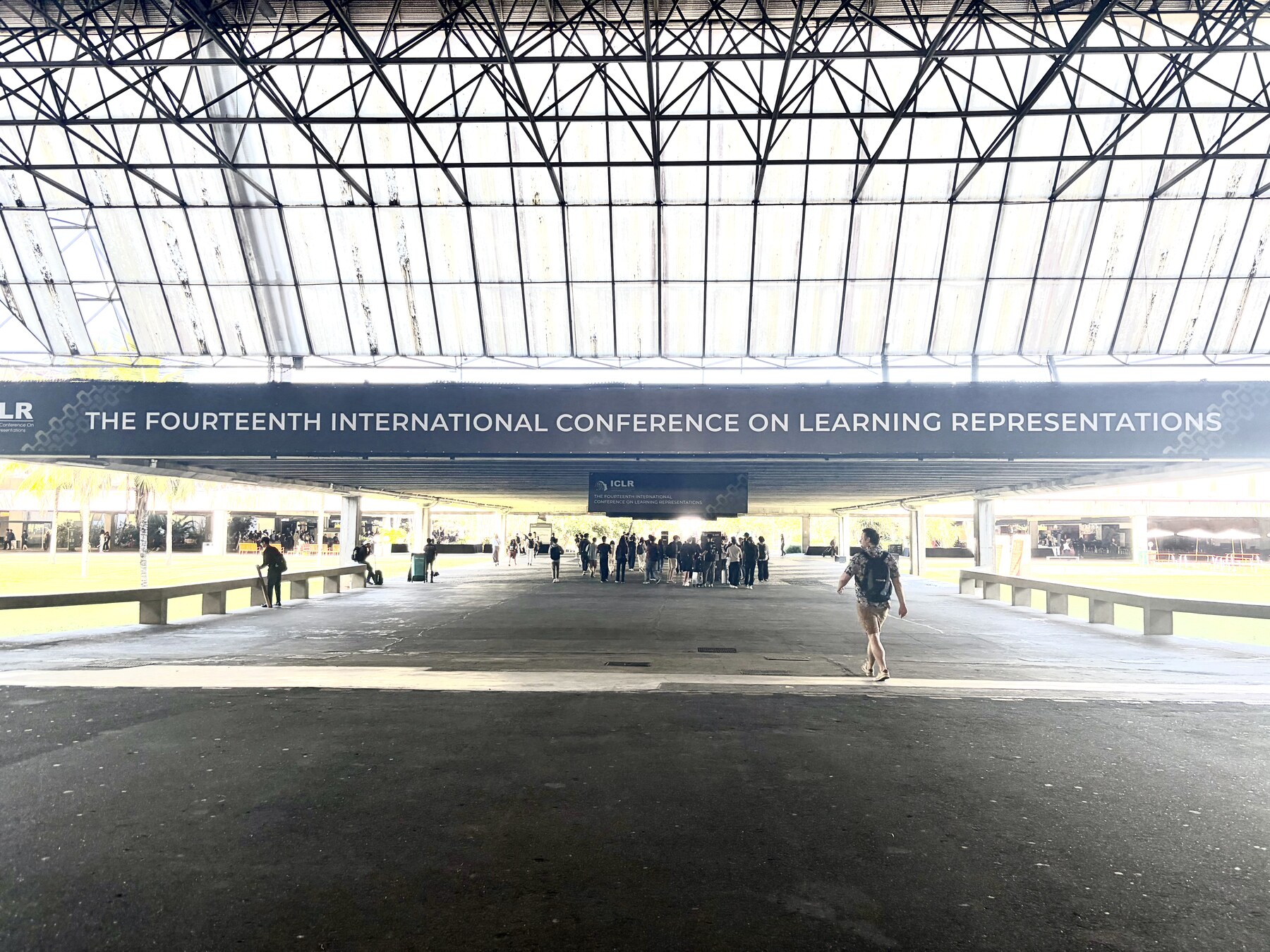
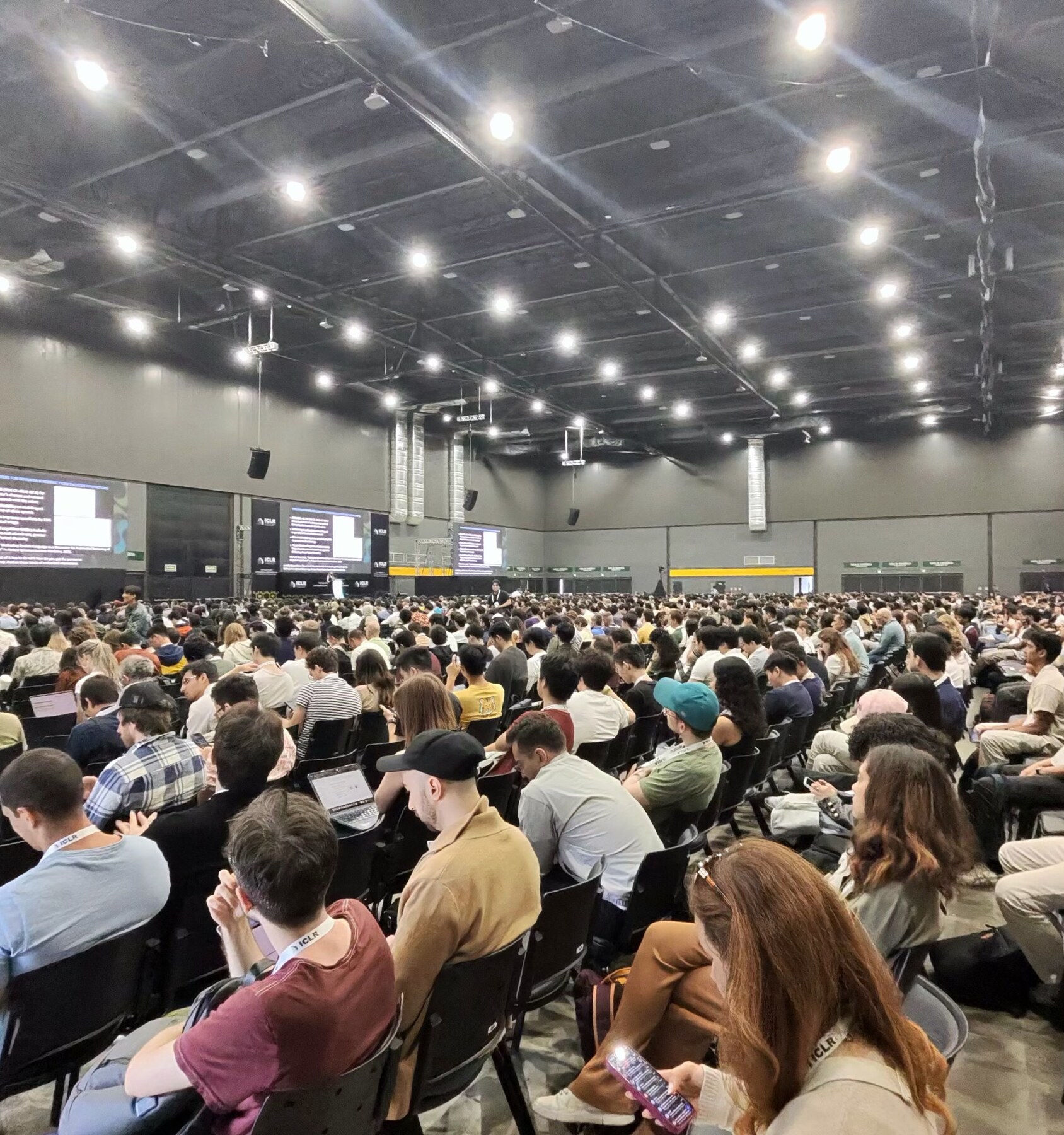
Riocentro was huge and well suited for a conference at ICLR scale. ICLR 2026 had grown massively. The official ICLR review-process post says the conference received 19,525 valid, format-compliant submissions, and 5,355 papers were accepted, an acceptance rate of 27.4%. Knowing that number while standing there made the place feel even bigger.
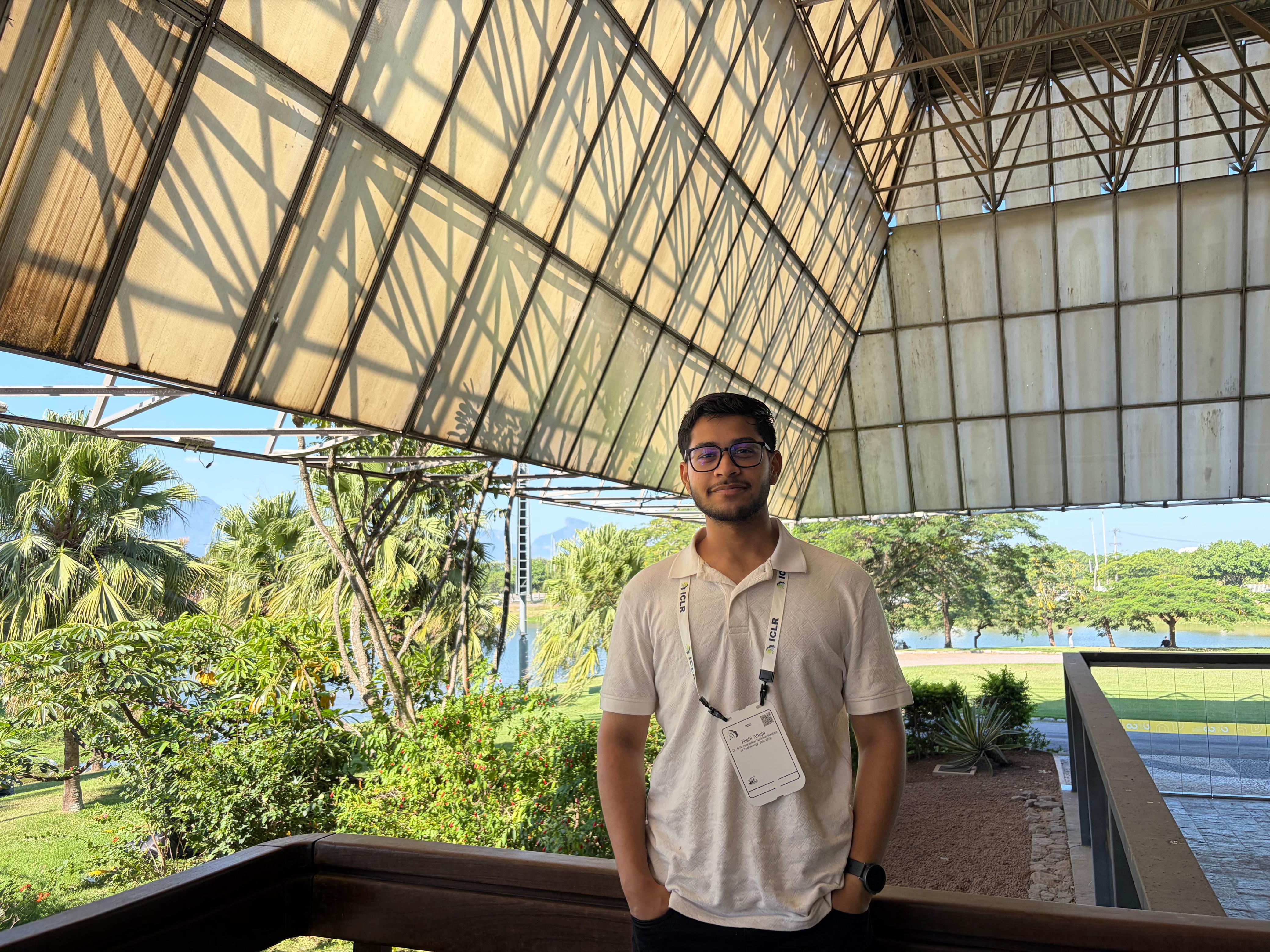
I went to the registration desk and got my ID card. It felt surreal to see my college name written alongside ICLR. It is one thing to know you have a paper accepted. It is another thing to stand at the venue, wear the badge, and see your institution represented there.
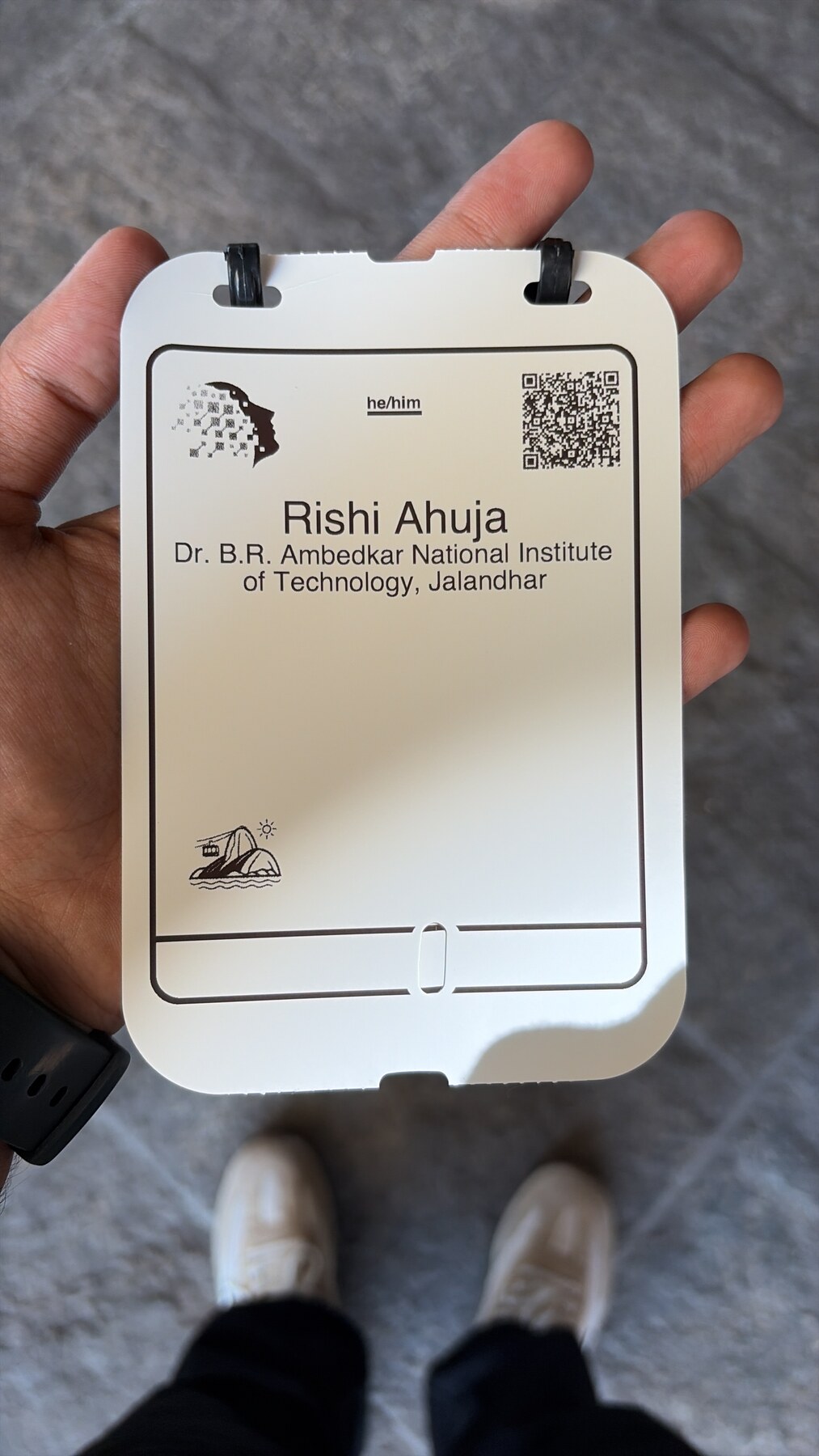
ICLR badge and proceedings.
After registration, I went towards an oral session. Outside the amphitheatre there was someone distributing free T-shirts from a company called Liner. When I reached, I was told it was the last one. He told me to come again the next day, but I never found that distribution again.
I also tried a local Brazilian drink called Guaraná. It cost me around R$12. Coming from India, I also noticed that there was no MRP-style printed-price culture in the same way I am used to. The same item can be sold at different prices depending on the seller and place.
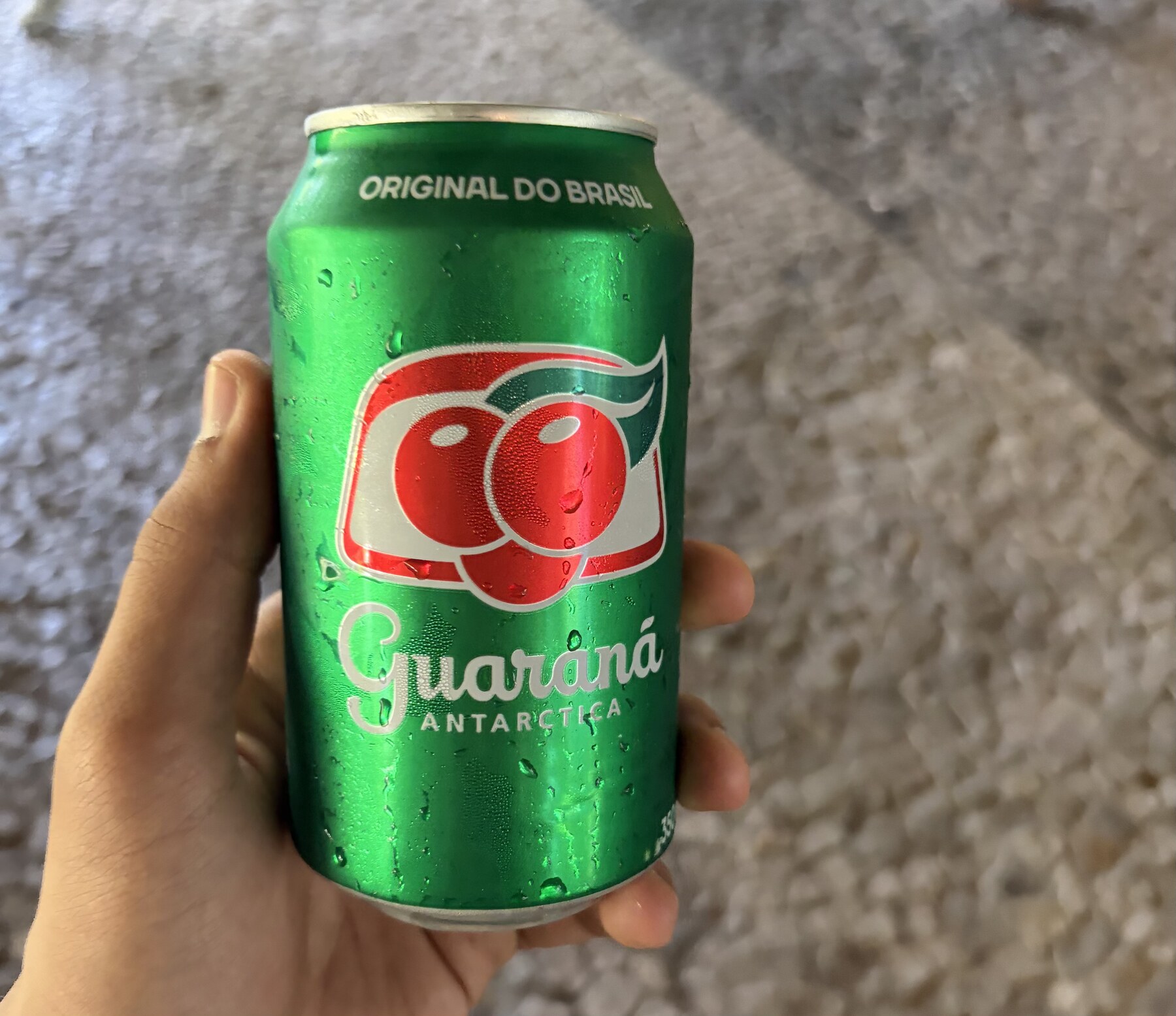
Guaraná, a Brazilian soft drink I tried at the venue.
Lunch at ICLR was paid, which is understandable for a conference with thousands of people. There were free snacks, but many were non-vegetarian and often included pork or ham. Some had egg, which I could eat. I eventually bought a burrito from outside for around R$32. It was dry but edible. This matched a broader pattern I felt in Rio, where food was manageable but not effortless for my preferences.
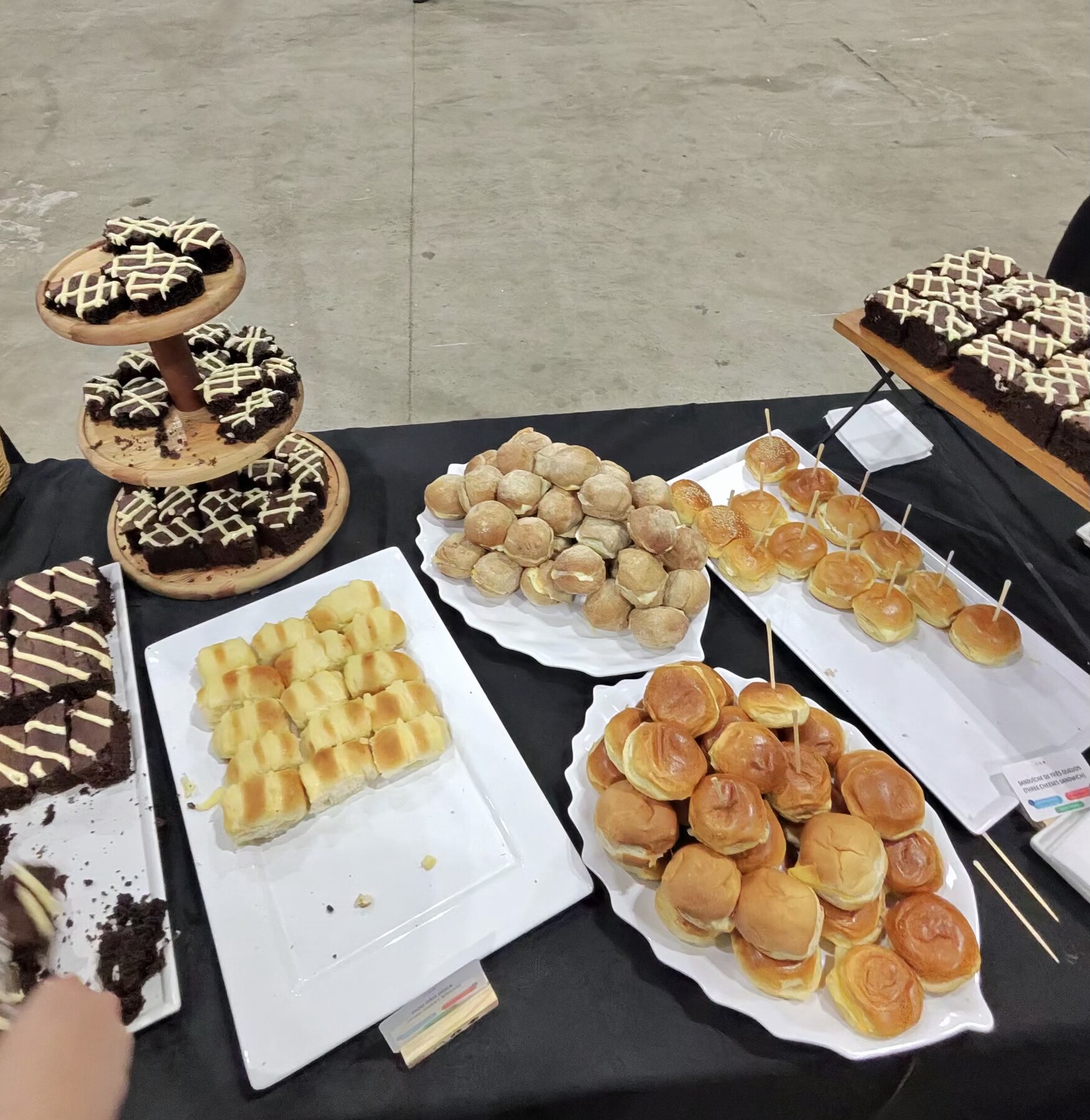
Food from the conference day.
Then I went to Pavilion 4, which was full of company booths. Almost every company you would expect at a major ML conference seemed to be there. The first booth I noticed was Jane Street.
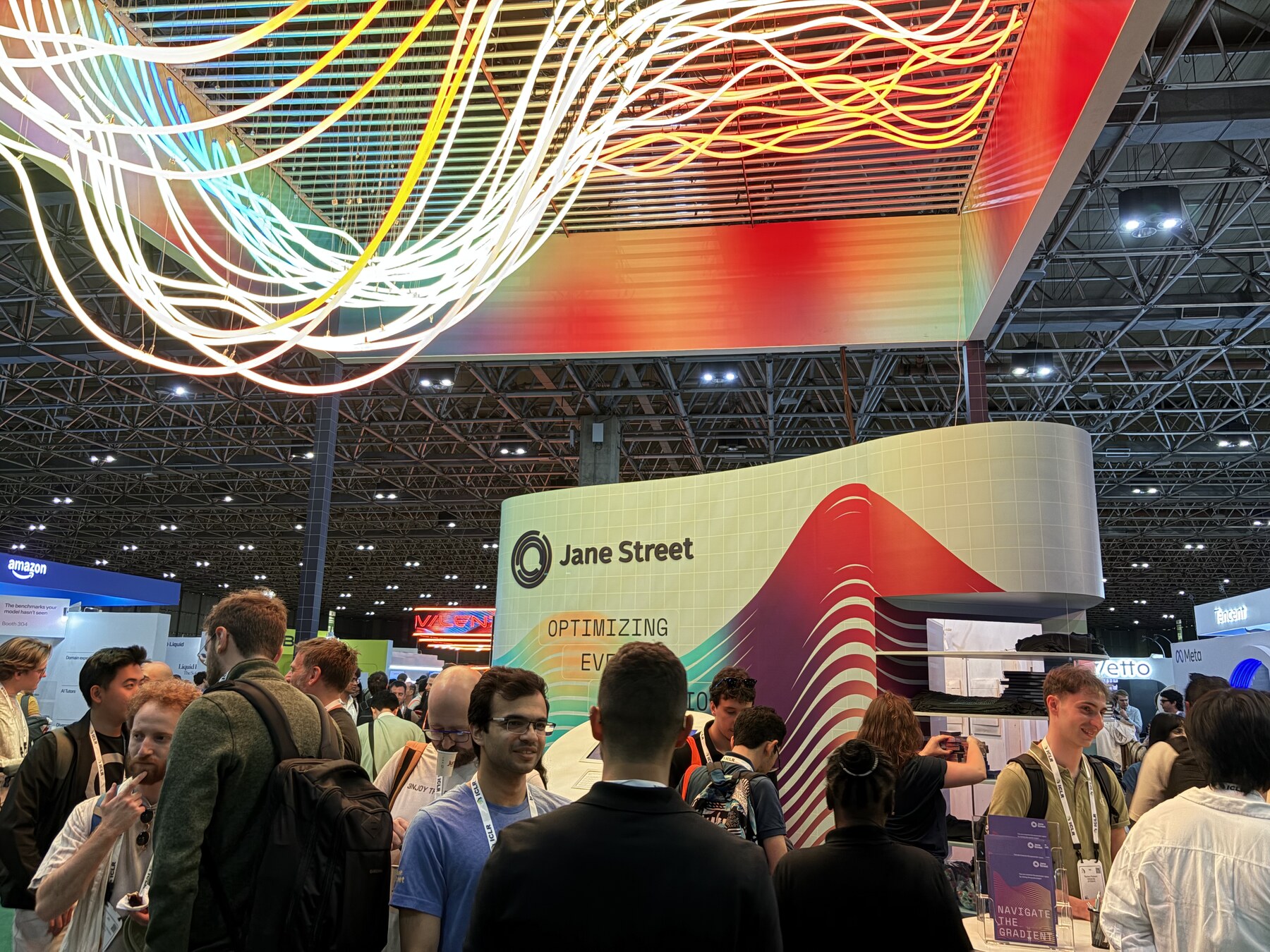
Jane Street booth at ICLR.
I spoke to or met people from many places, including Microsoft, Nebius, CUHK, Google DeepMind, Amazon, MBZUAI, Salesforce, Handshake AI, Vetto AI, Appen, Western, Nubank, Translated, Baseten, Eqvilent, Susquehanna, Prolific, MATS Research, Rise Data Labs, and more. Some conversations were very short, some were useful, and some were just about understanding what people were building.
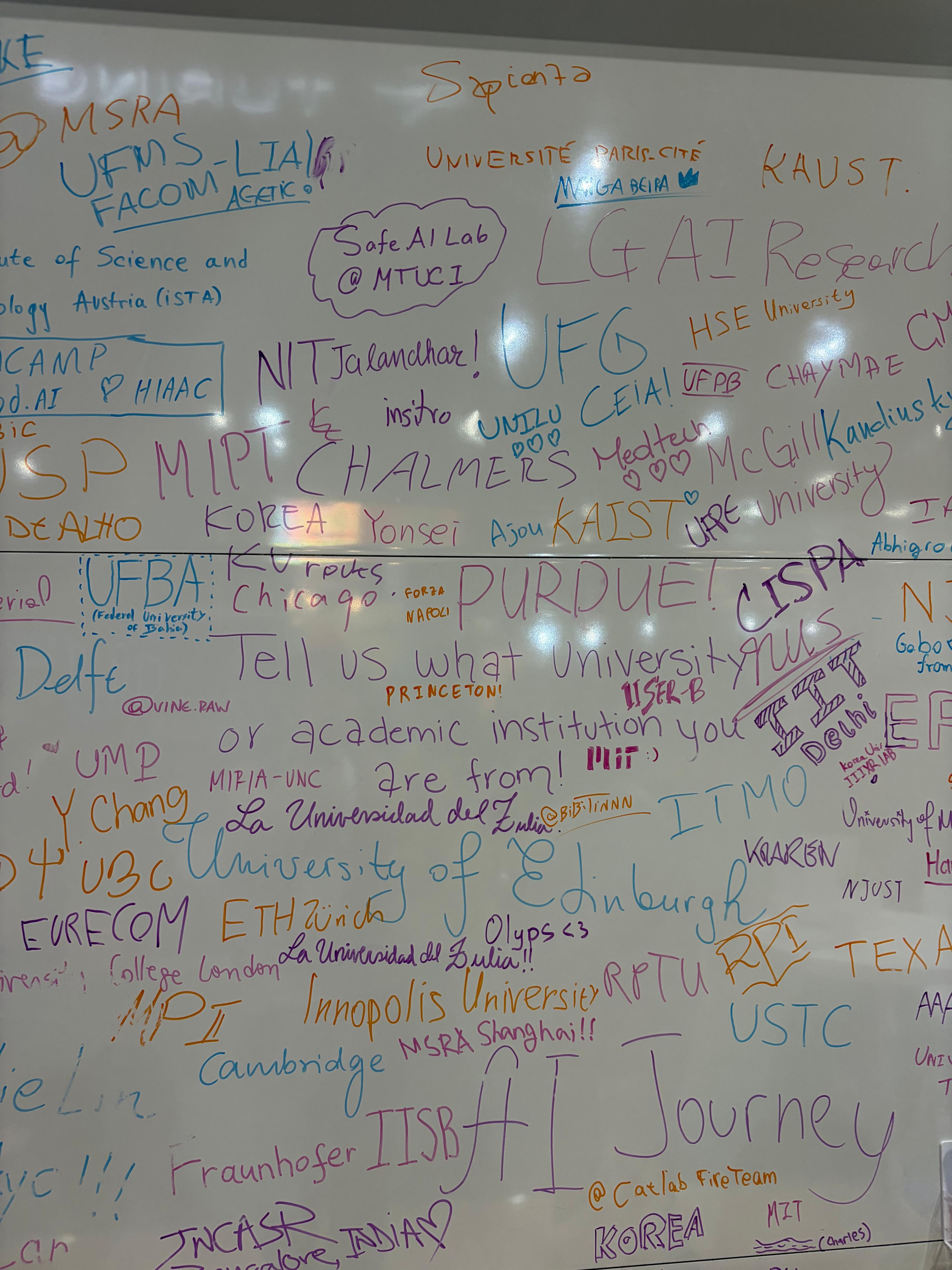
I wrote NITJ on a board there. It felt good to leave a tiny mark from my college. I also saw an affiliation/statistics visualization where China and the US dominated the accepted-paper landscape. A community analysis going around after ICLR put mainland China around 43.7% and the US around 31.9% of accepted-paper affiliations. I would not treat those exact affiliation numbers as official conference statistics, but the broad point was obvious. India was a very small presence compared with the biggest research ecosystems. Standing there as someone from NIT Jalandhar made that hit differently.
Learning Rio's Bus System the Hard Way
After the first conference day, I had to figure out how to go back to Ipanema. Uber would again cost around R$50, which was not sustainable. I accidentally saw a bus passing by and remembered reading a tweet that Rio's bus system was efficient.
I asked a bus driver for help. Of course, this happened through a translation app. He told me to take bus 881 from Riocentro to Alvorada, and then 553 or 554 towards Ipanema. I also asked whether they accepted cash because I had read about the Jaé card, Rio's public-transport ticketing system.
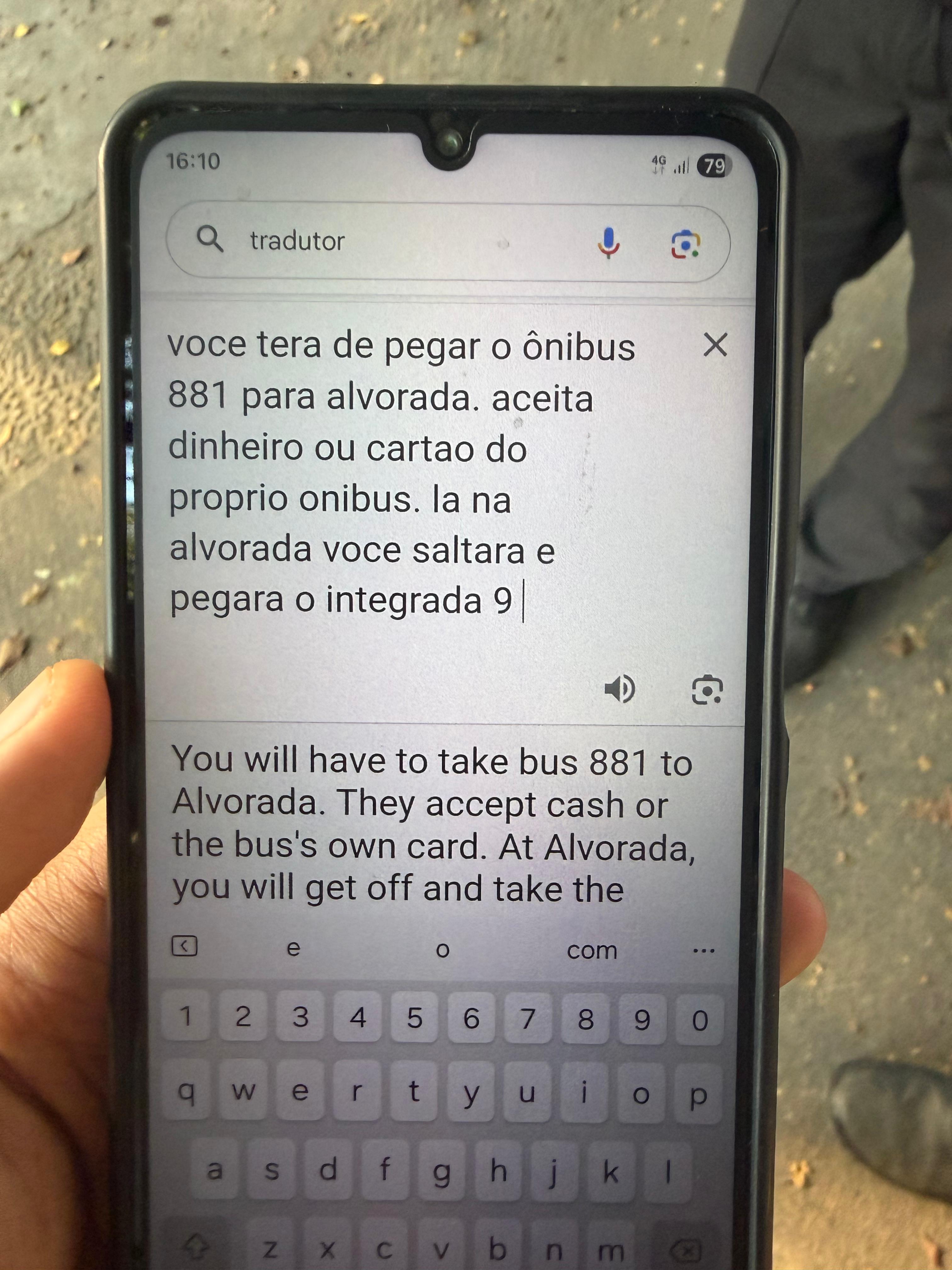
Translation app conversation while figuring out the bus route.
I boarded the bus and immediately became confused. The bus had a gate and turnstile system where you pay the driver or tap a card, and only then the gate opens. The problem was that the only cash I had was a R$50 note, given to me by Rajeev sir earlier.
The fare was R$5, whether you went one stop or all the way to the end. The driver did not have change for R$50. I offered the note anyway, and he basically told me not to worry and keep standing. He understood that I was a foreigner and a little helpless. He dropped me at Alvorada, where bus 554 was already waiting.
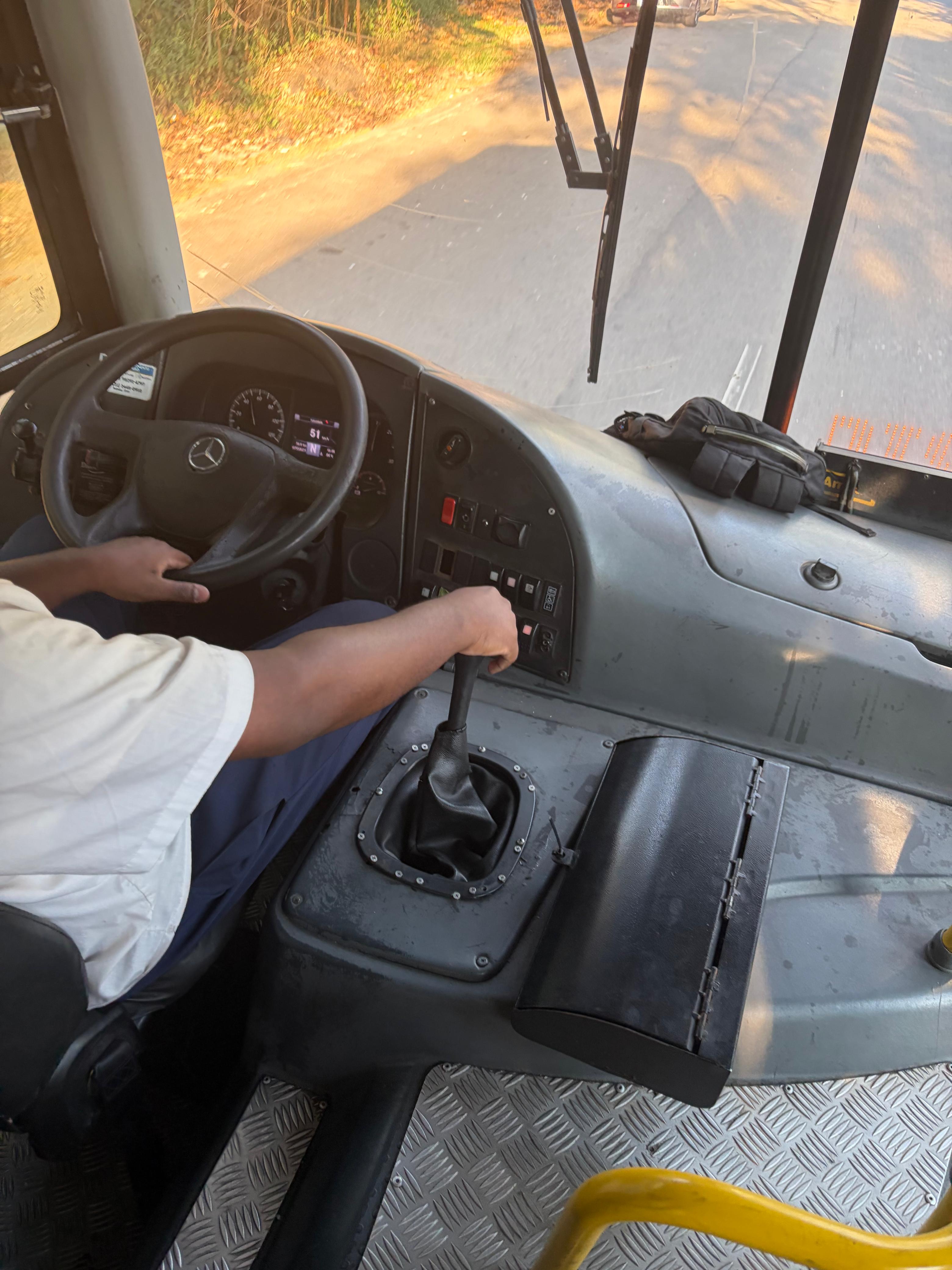
Standing in the bus while figuring out the system.
I boarded 554 and explained the same issue to the next driver. He also let me stand and dropped me without making a fuss. I got down a little before Ipanema because I was following a rough estimate on Google Maps and was not sure how close the bus would go. At that time, I did not know about the best local tracking options.
Later I learned that Moovit is useful in Rio for bus planning. Even then, you have to be alert. Buses may not stop automatically at every sign. In my experience, you need to wave early and clearly, sometimes from quite far away.
After getting down, I clicked some photos and then took an Uber Moto to the hostel.
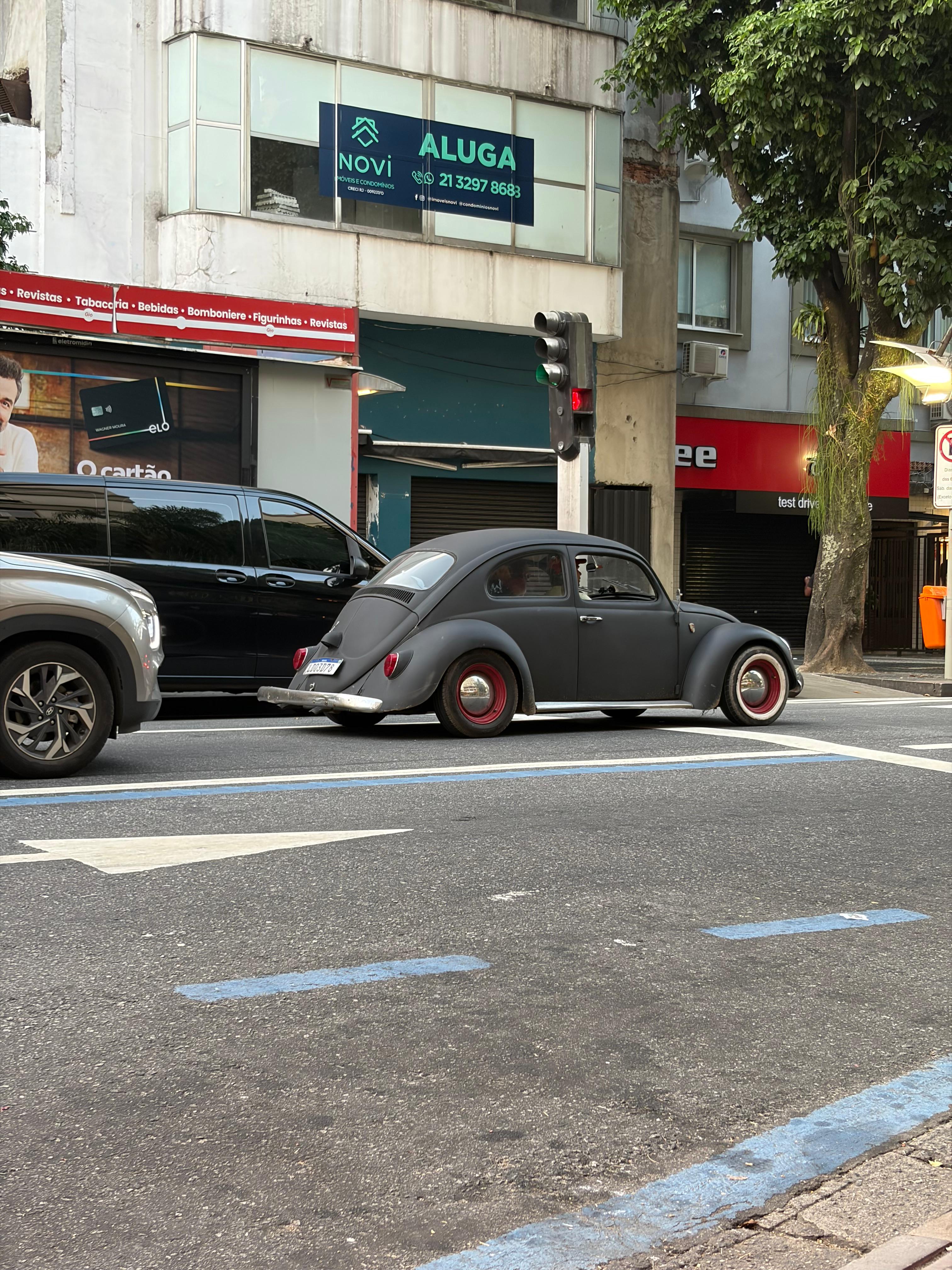
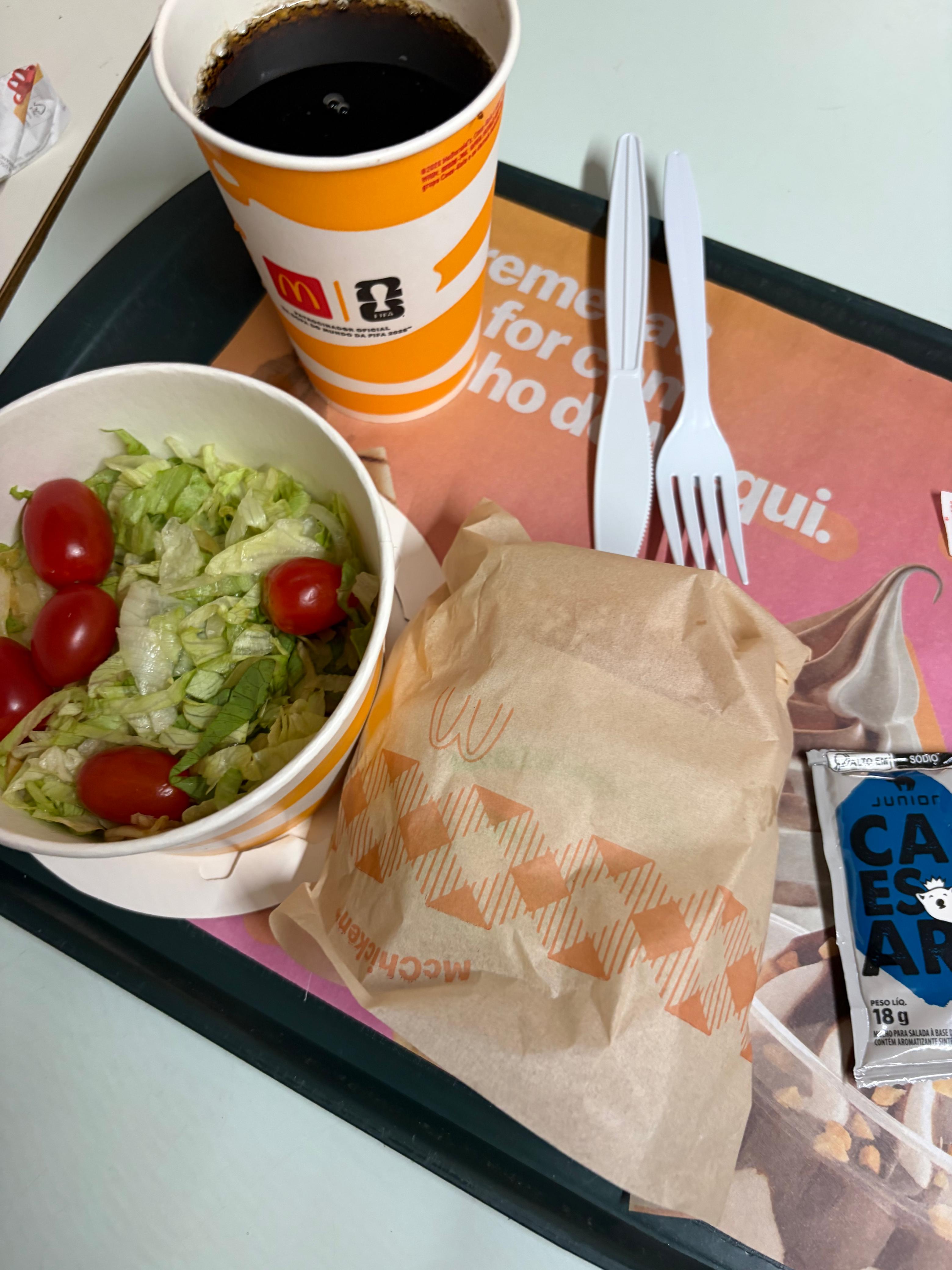
At night I went to McDonald's because it felt like the safest food option. I also asked the hostel reception about cash exchange and found out there were metro stations after every few blocks in that part of the city. That was useful to know, but the ATM I tried only accepted Brazilian cards, so it did not solve my cash problem.
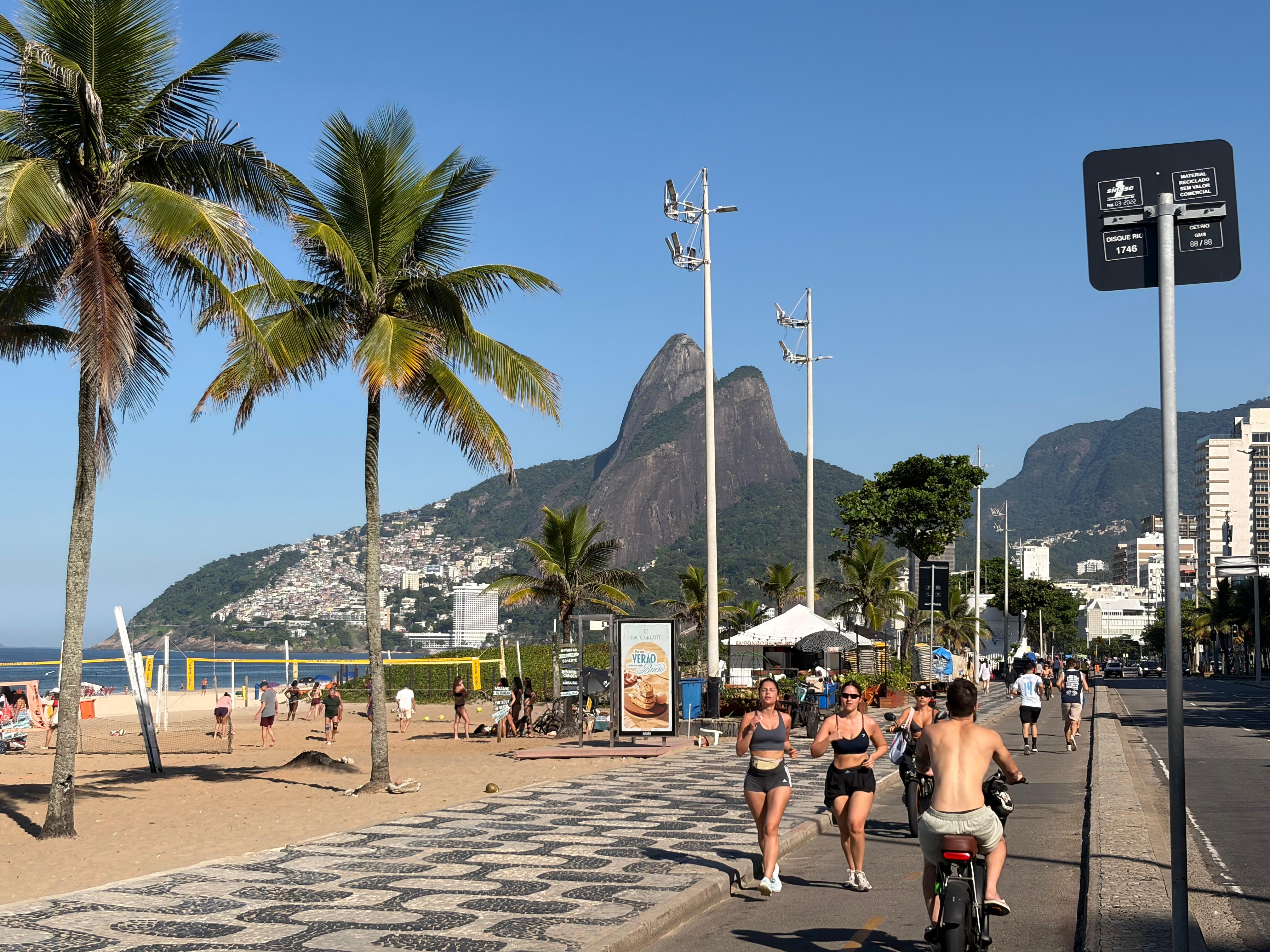
Finally, I visited Ipanema beach for the first time. It was almost closed, with very few people around, and it was already dark because sunset in Rio around that time was close to 5.30 PM. The beach still felt good, but Rio after sunset also felt like a place where you should stay aware.
There was also a cat at the hostel. That was the end of day one.
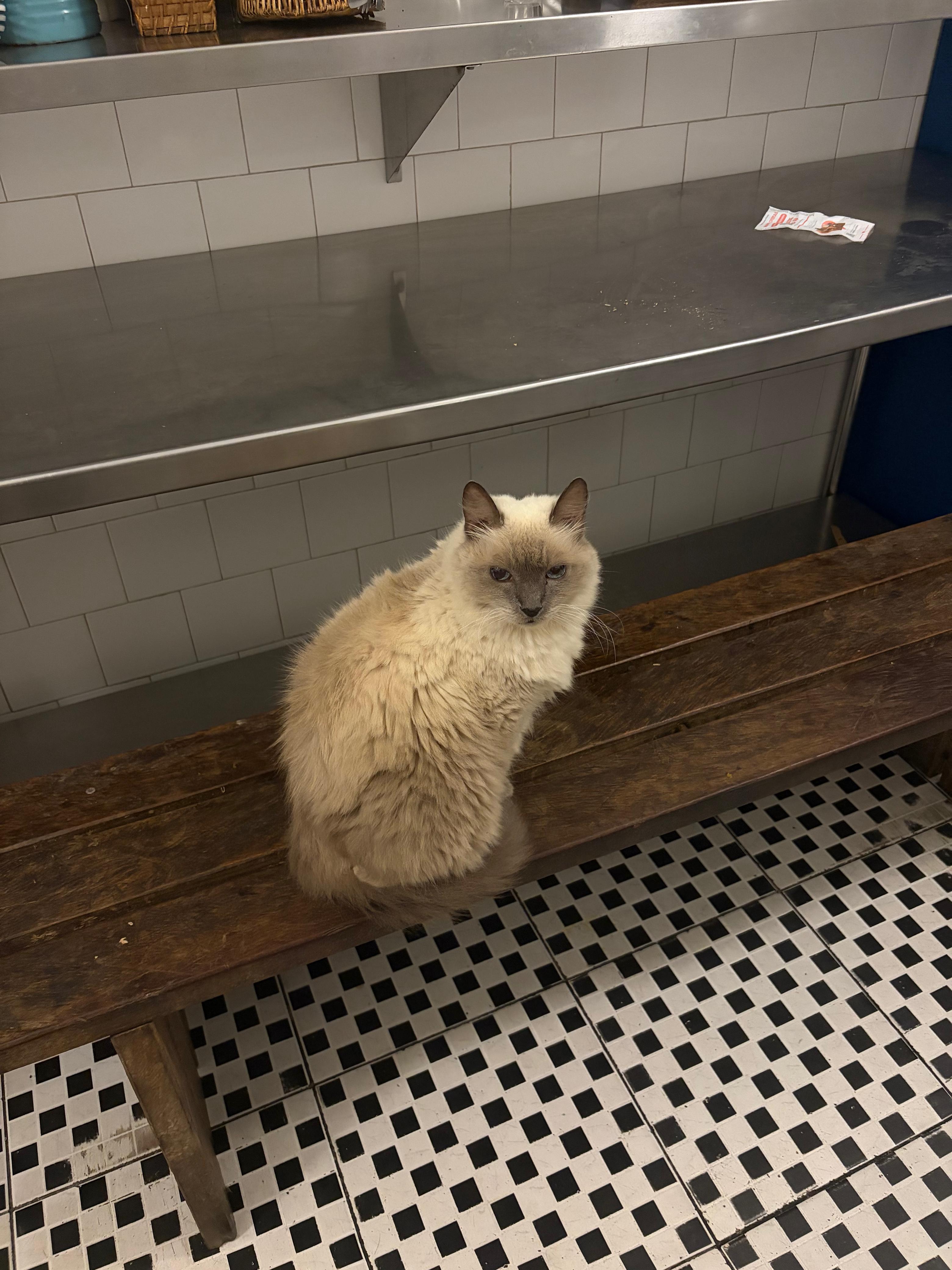
Hostel cat.
More Conference Days, More Transport Lessons
The next morning I again had cheese bread and scrambled eggs, and decided to try the bus properly. I figured out that Moovit could track buses better than my rough guessing.
I waited for the bus. The turnaround time was usually around twenty minutes. After missing one bus, I realized I had to signal clearly. Buses do not always stop just because someone is standing near a bus stop.
I finally took a bus, but I boarded the correct number in the wrong direction. That was frustrating, and I eventually gave up and booked an Uber Moto.
Uber Moto in Rio was fast. The bikes were generally much more powerful than typical Indian commuter bikes. Because the roads were wider and traffic was more organized in many areas, the bikes could move quickly and lead the traffic. It saved money compared with Uber cars, but it is not something I would recommend casually to everyone unless you are comfortable with fast two-wheeler rides.
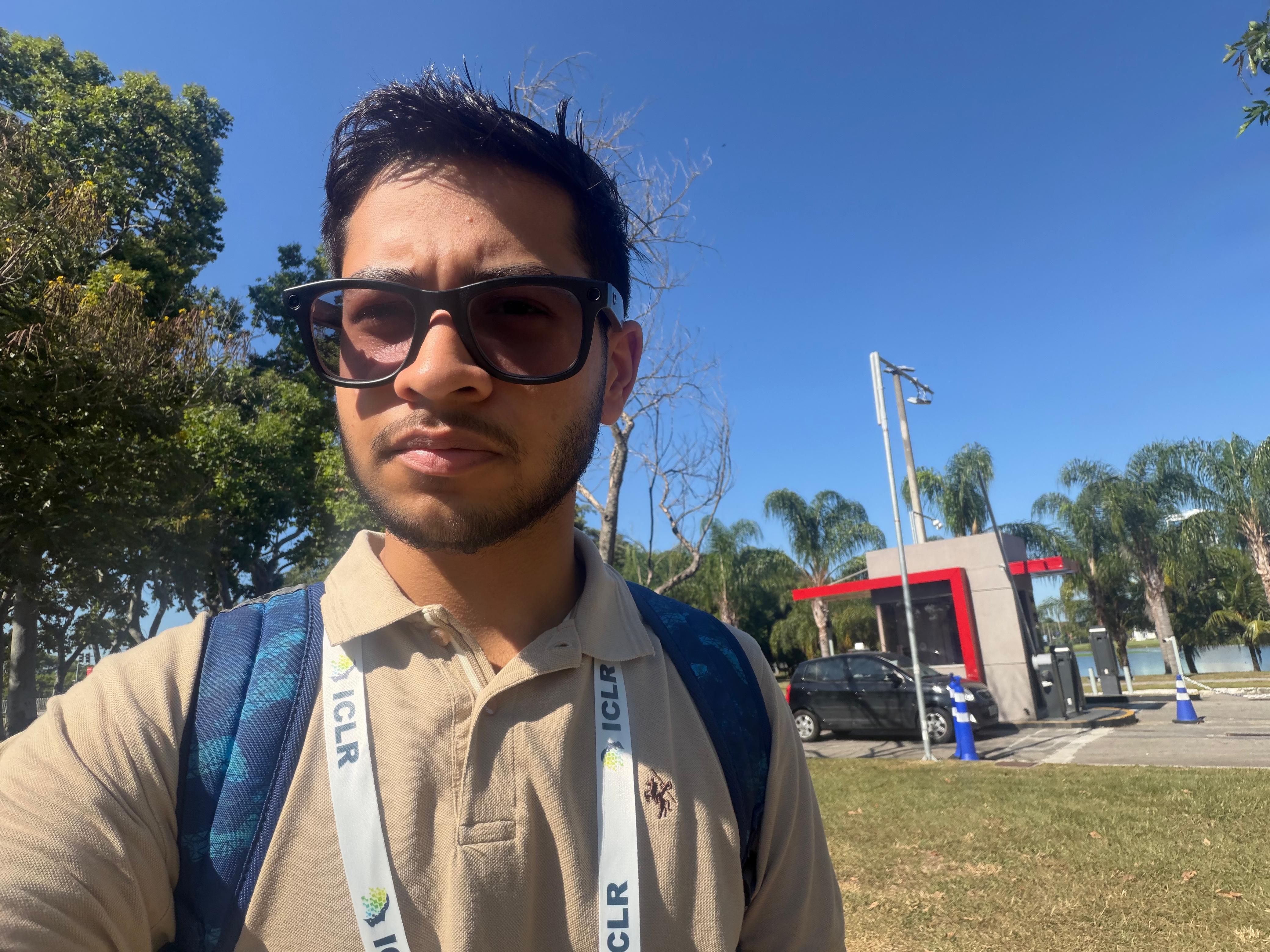
View from the Uber Moto ride.
Back at the conference, I saw a map where I had left another small mark from the city and college side.
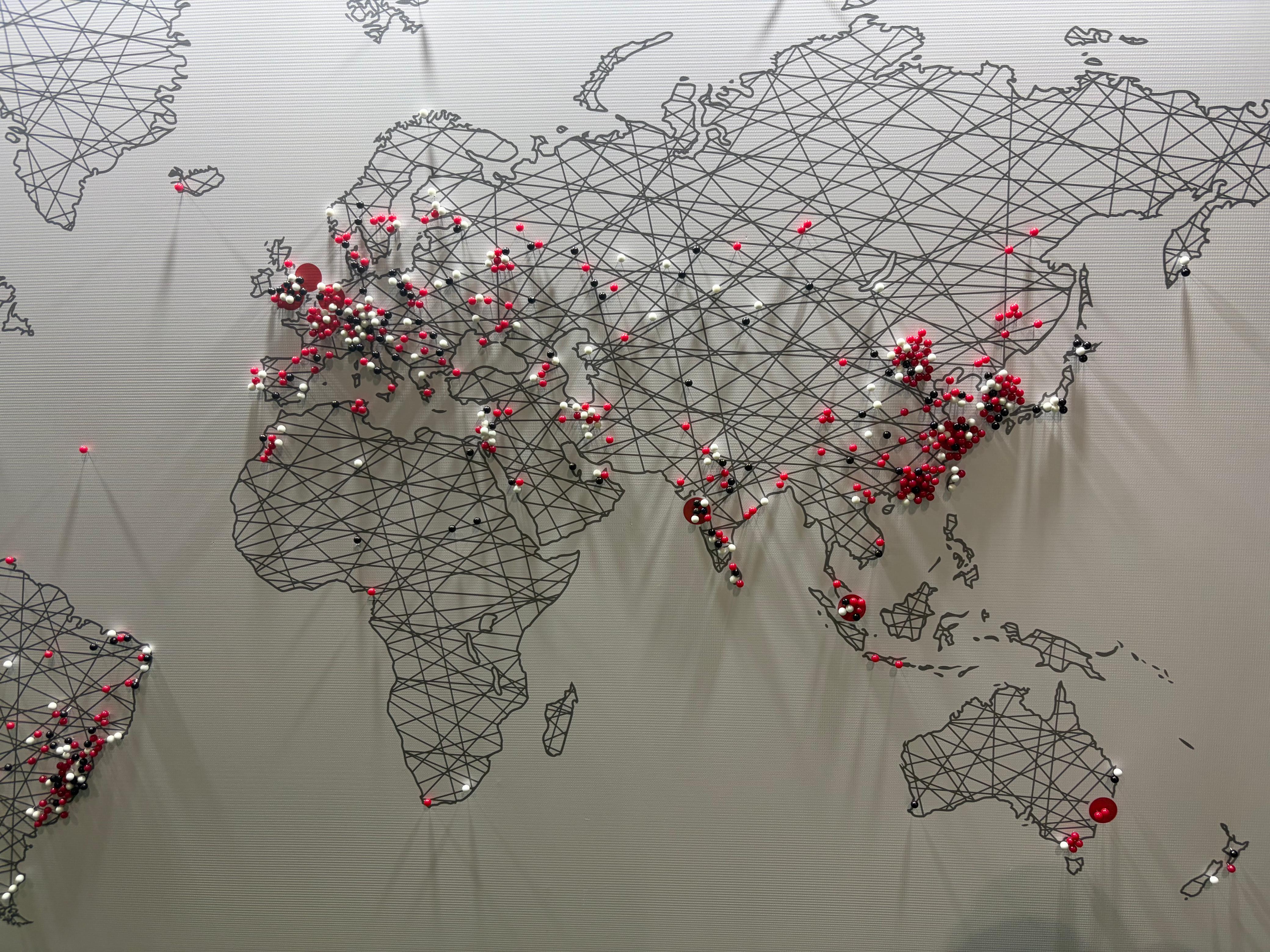
Conference map / booth activity.
I attended some amazing oral sessions, including GEPA, and also an invited talk by Katie Bouman. Her talk was extremely clear and easy to understand. Seeing someone whose work I had known from far away speak live at ICLR was one of those moments that made the conference feel real.
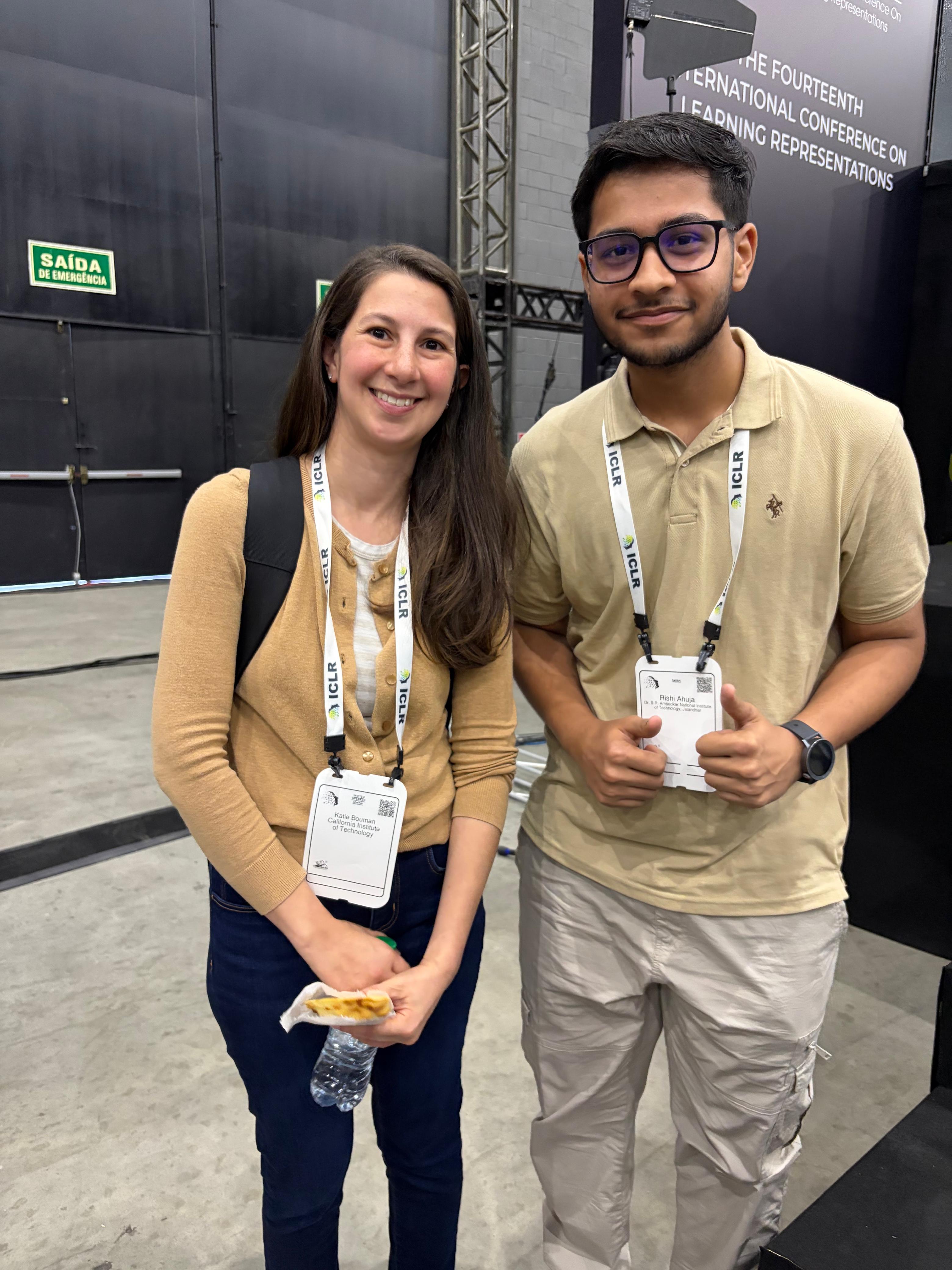
Across these days I met a lot of interesting people and saw many posters. Some names I remember are Nay from SMU, Hari from TUM, Sedigheh from Perplexity, Saket from Brown, Ada from the Max Planck Institute, and many others. I also attended the Test of Time awards and had a long discussion with Rajeev sir before going back.
Dinner again ended up being McDonald's. This became a pattern because predictable food is valuable when you are tired, hungry, and still figuring out a new city.
The next day I boarded the bus correctly in the morning and reached the venue. Rajeev sir had his poster presentation that day, so I helped him set up his poster. I attended more sessions, met more people, solved some Jane Street puzzles, and went to a mentorship session with Prof. Evan and Prof. Yuntian. Both were excellent.
The return journey that day was again messy. Bus 881 was not available when I needed it, and only the connecting buses 553/554 seemed to be running. I waited for around thirty minutes, then took an Uber to Alvorada. From there I boarded bus 553, but again it was going in the wrong direction.
On that bus, a woman started talking to me. She said she was doing a PhD, liked Indians, and knew how to make Indian food. We had a good conversation, but she eventually made me realize I was on the correct bus number in the wrong direction. She told me not to panic and even suggested going for coffee. She seemed genuine, but I did not want to take unnecessary risks in a city I barely understood. I got off, took the correct bus, and went home.
This is one of the strange things about travel. The most confusing moments also become the most memorable ones.
The Day Before My Presentation
My paper presentation was the next day, so I wanted a proper meal before preparing. I asked the hostel reception what Brazilian people usually eat for a normal full meal. They pointed me to a cheap local restaurant where I could get a plate of food.
For my dietary constraints, the options were limited. Most things were pork or beef, but I found two chicken options. I ordered fried chicken, green rice, and potato wedges. It was good, but it cost around R$50, which is close to INR 1,000 for one meal. Rio is not cheap if you are converting everything to rupees.
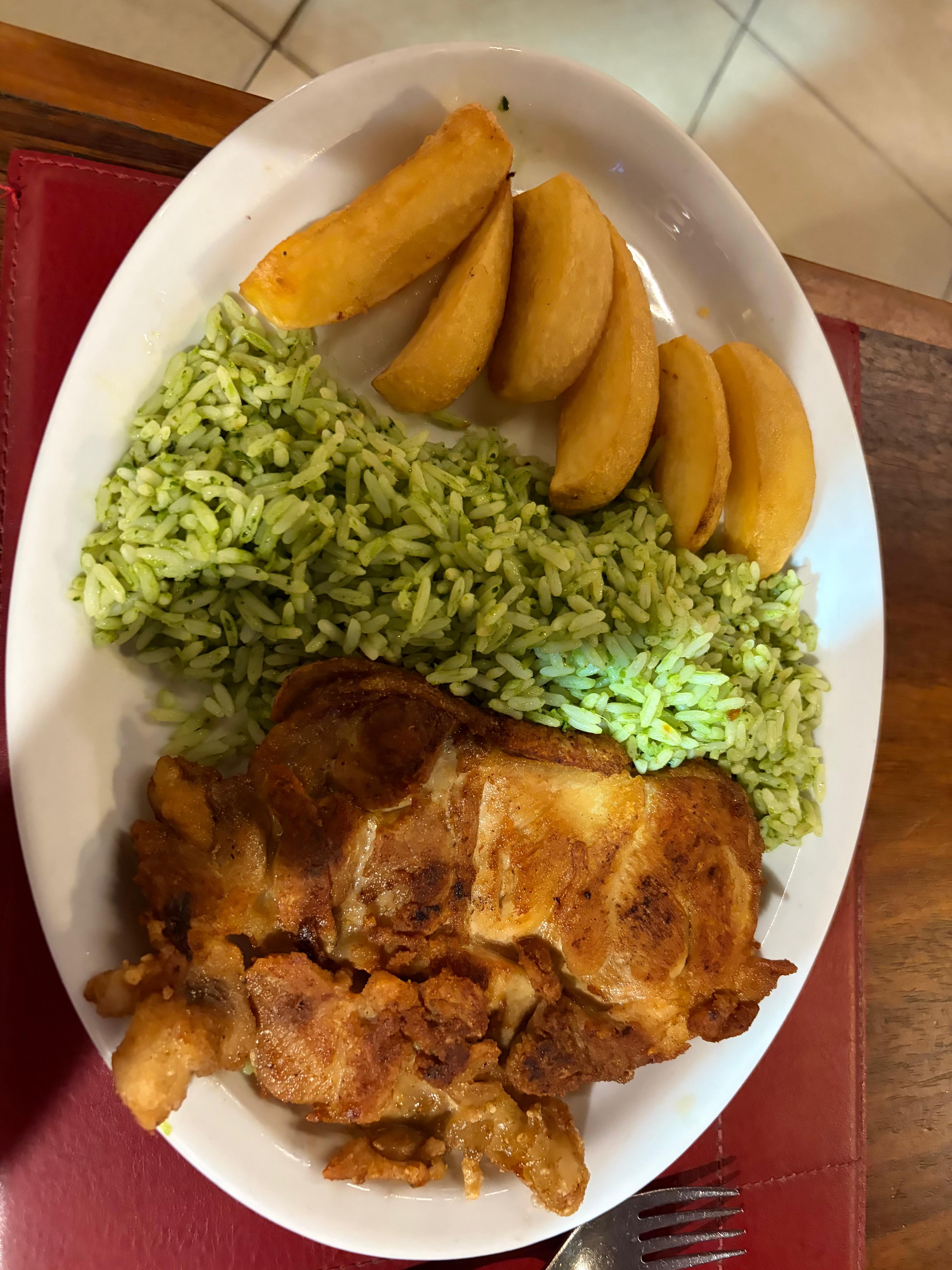
Fried chicken, green rice, and potato wedges.
After that I relaxed and prepared for the presentation.
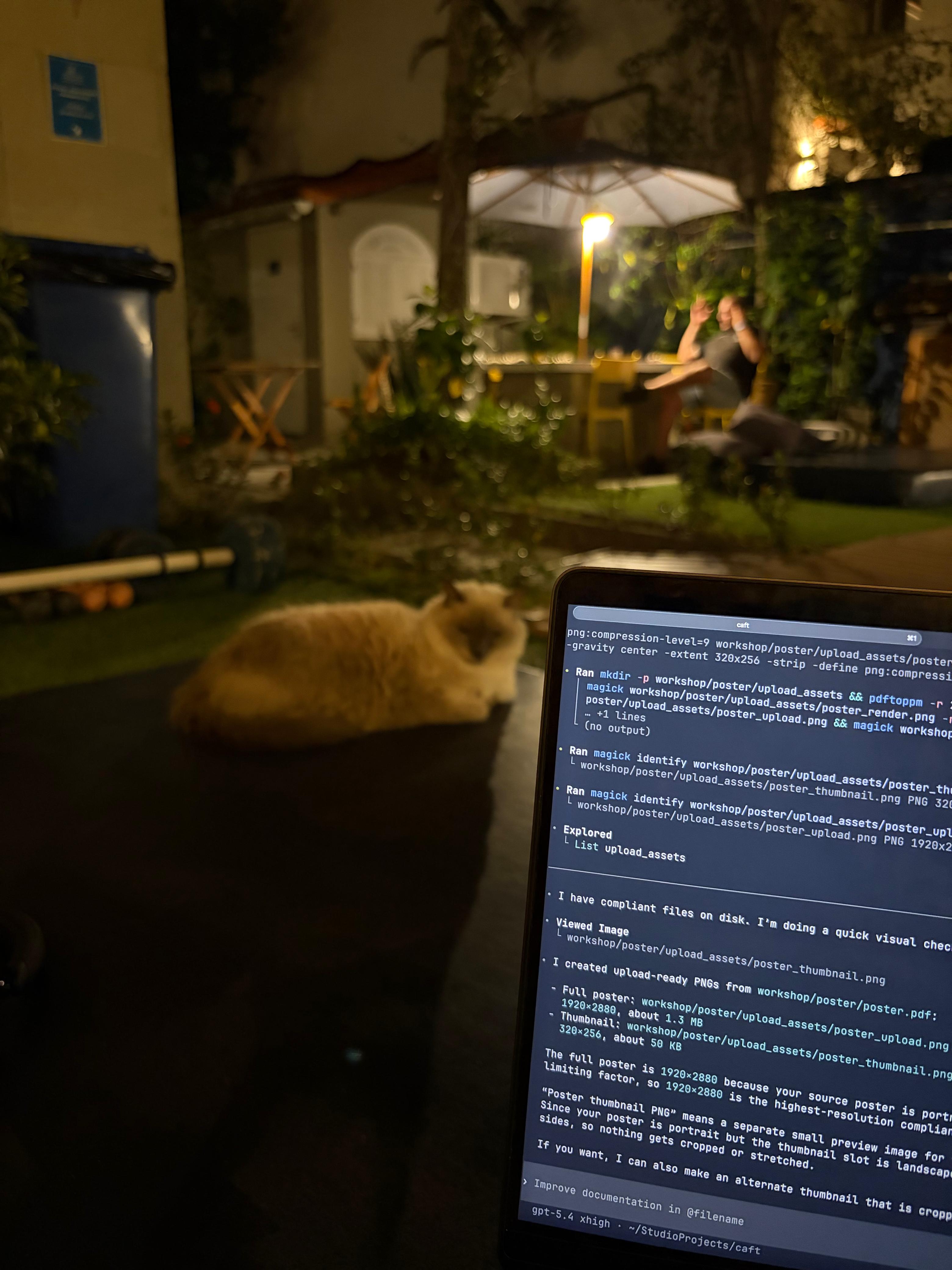
Preparing for the poster presentation.
Presentation Day
The next day I got ready in formals and again boarded the bus. By then the bus had become part of the story.
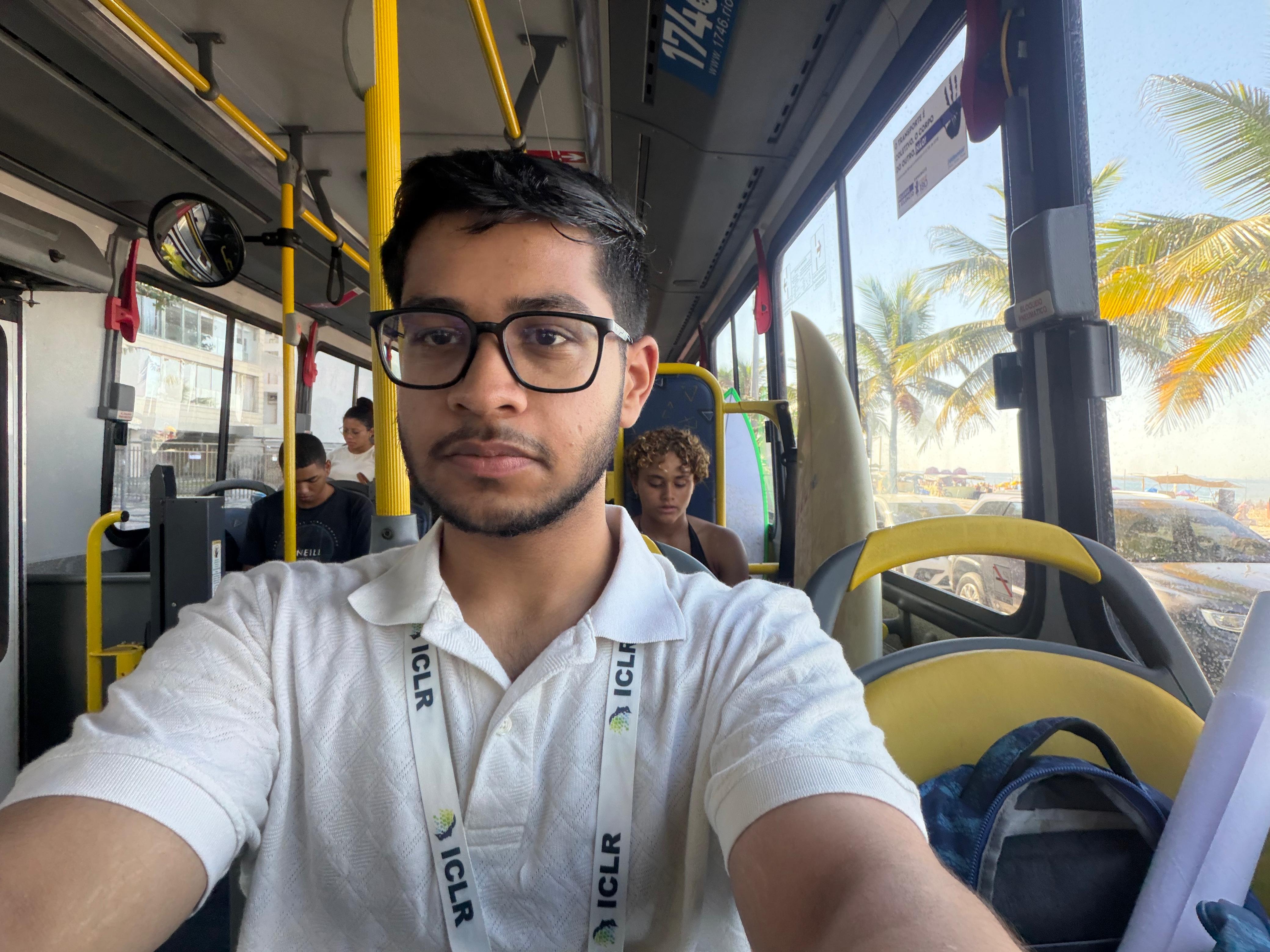
Presentation day, still using the bus.
There were no big company pavilions that day. It was mostly workshops in smaller rooms. Mine was in room 205.
I went to my room, attended a talk, and initially worried because there did not seem to be space for my poster. Eventually, after the session, I got a really good spot, almost like a spotlight position.
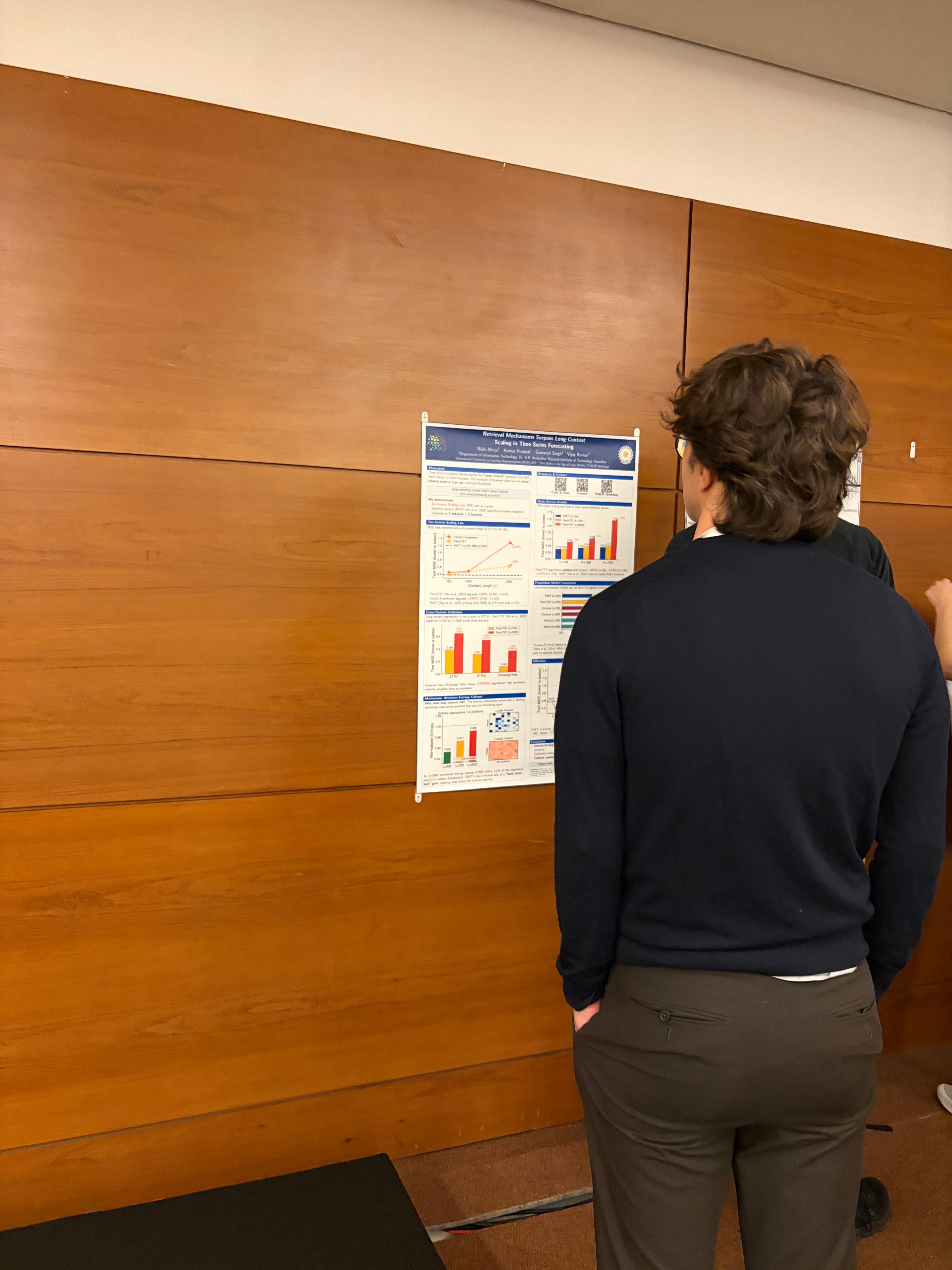
I met more amazing people that day, including Anatas, Poojita, and Jimmy. Poojita was from Chandigarh, and we had a really nice interaction. Rajeev sir and I got food, clicked some photos around the venue, and then went back.
Ipanema, BRT, and the Jaé Card
That evening we planned to see the sunset at Ipanema. To save money, we tried taking public transport. The route in Moovit suggested taking a BRT bus first and then a normal 553 bus.
BRT in Rio felt like a tram system on the road. It has dedicated lanes and stations, and it is much more structured than a normal bus stop. The problem was payment. Unlike the normal buses I had used, the BRT did not allow cash. We needed a Jaé card.
Useful update. While editing this in May 2026, I found Rio City Hall guidance saying that VLT and BRT already operate without cash payments, and that municipal buses were scheduled to stop accepting cash from May 30, 2026. During my late-April trip, cash still worked on the normal buses I used, but not on BRT. Check the latest rules before relying on cash.
We struggled with the machine for a while. Eventually we figured out that we had to select credit card instead of debit card. Then we needed to load money into the card. A lady there helped us a lot. She credited R$20 for us, and we paid her in cash.
The bus route took longer than expected, and by the time we reached Ipanema, we had missed the sunset. We reached around 6.30 PM. We still went to the beach and spent around thirty minutes there, but by then the main concern was how Rajeev sir would get back safely because he had a long way to go.
The problem was that we had almost no cash and no useful balance left on the Jaé card. We had only a R$50 note, and getting change in Rio was often difficult. I ran back in the opposite direction to get cash from my wallet. There was confusion, delay, and a missed bus. Eventually he got a bus and reached around 10.30 PM.
Bad decision-making from our side. Rio becomes a very different city after sunset, and sunset was around 5.30 PM. Future travelers should not plan public-transport experiments late in the evening unless they already understand the route, payment method, and last-mile safety.
Christ the Redeemer
The next day was for sightseeing. We planned Christ the Redeemer and Sugarloaf Mountain.
I woke up early, but Rajeev sir had to come from far away. Another friend, Abhipasa, also joined. We had already booked tickets for the Corcovado train through the official Trem do Corcovado route. The train starts from Cosme Velho and goes up through Tijuca National Park towards Christ the Redeemer.
From online research, morning seemed like the best time to visit because the weather can change quickly and crowds increase later. We booked a morning slot and thought that the exact time meant the train would leave exactly then and we had to catch that specific train. In practice, at least for us, it was more flexible. We stood in line and boarded when the train came, around 10.20 AM.
I would still tell future visitors not to depend on that flexibility. Check the latest official rules and reach early. Tourist attractions in Rio can get crowded, and ticket-slot rules may be enforced differently depending on the day.
The train ride itself was short, maybe fifteen to twenty minutes, but beautiful. When we reached the top, Christ the Redeemer was impressive, but the view was the real highlight. From there you can see Rio's beaches, mountains, city blocks, water, and the strange way the city fits between all of them.
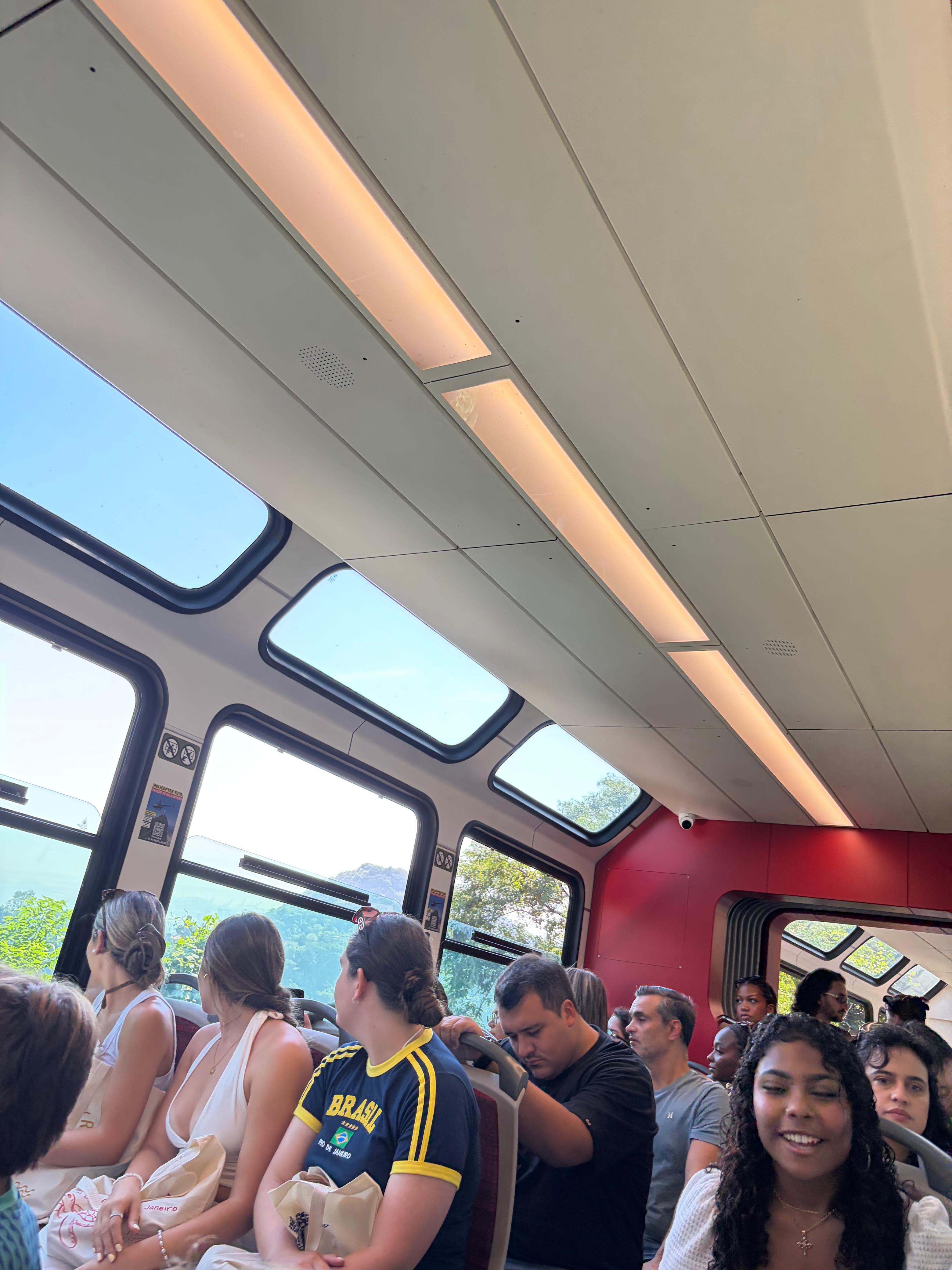
We came back down around 11.30. At the bottom we had a cheese sandwich, which was one of the only vegetarian-ish options we could find there.
Sugarloaf Mountain
After Christ the Redeemer, we went to Sugarloaf Mountain. We had heard that 3-4 PM was a good time to go because you can see daylight, clouds, and then sunset. We booked the ticket there. It cost R$205 each, which was expensive but ended up being worth it.
The official Sugarloaf cable car route starts at Praia Vermelha, goes up to Morro da Urca, and then continues by a second cable car to Pão de Açúcar, the actual Sugarloaf Mountain. The ticket lets you do both cable-car legs.
We also had some corn there before going up.
There are two mountain levels. First you go to Morro da Urca, the middle mountain. Then you take another cable car to Sugarloaf. There was no strict feeling that you had to take a specific cable car at a specific time. You could move with the flow.
The top mountain was cloudy when we reached. It felt like standing inside a cloud. The views kept appearing and disappearing, which made it even more scenic. Later we came back to the middle mountain around 5 PM to see the sunset.
That sunset was one of the best I have ever seen. The light, the water, the mountains, and the city all came together. It was easily one of the strongest memories of the trip.
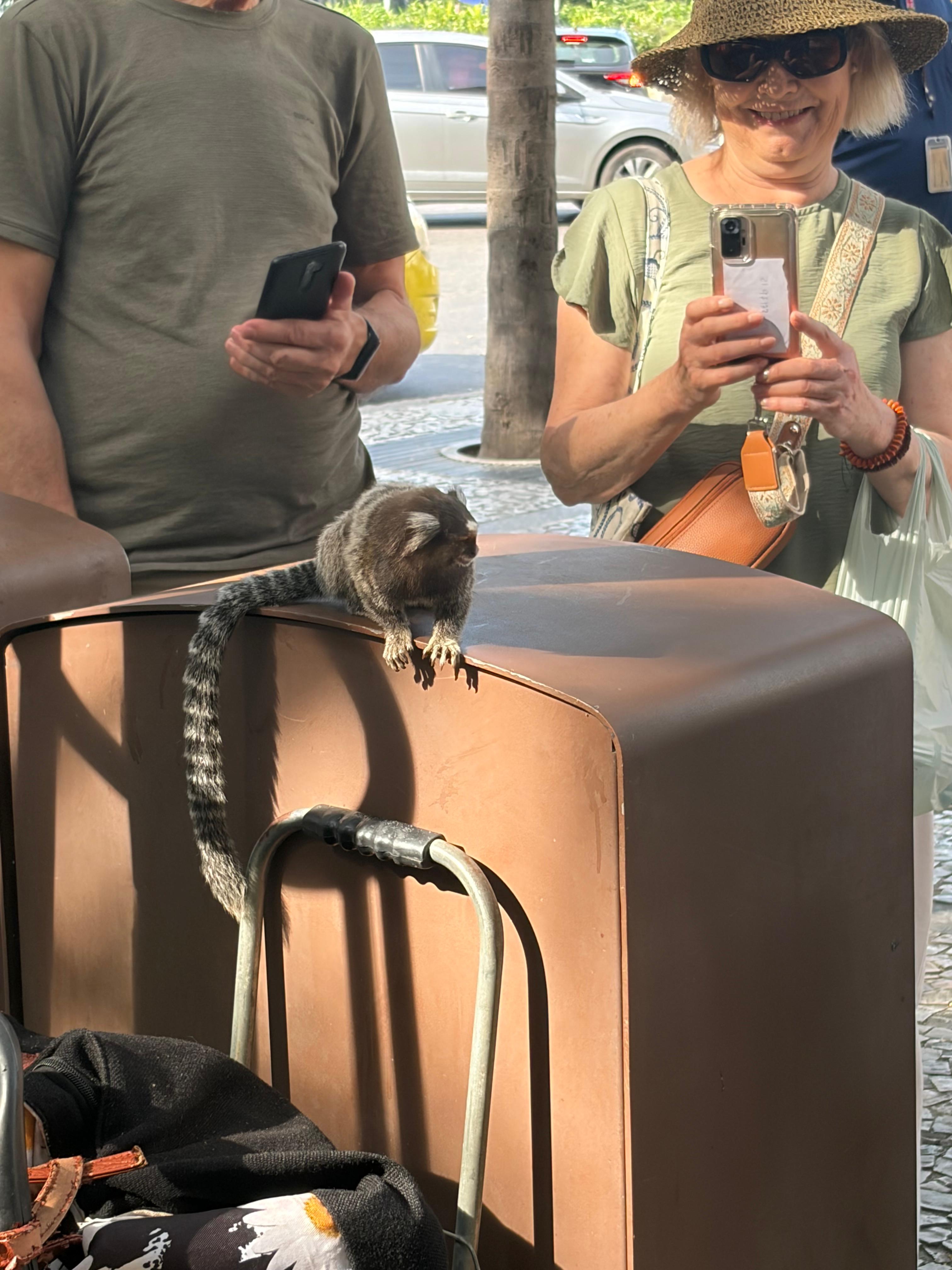
Hostel People and Botanical Garden
That night I came back to the hostel and met new people. I played Uno with Dirk, Sophia, and Henri. We stayed up late, discussed cultures, and had a lot of fun.
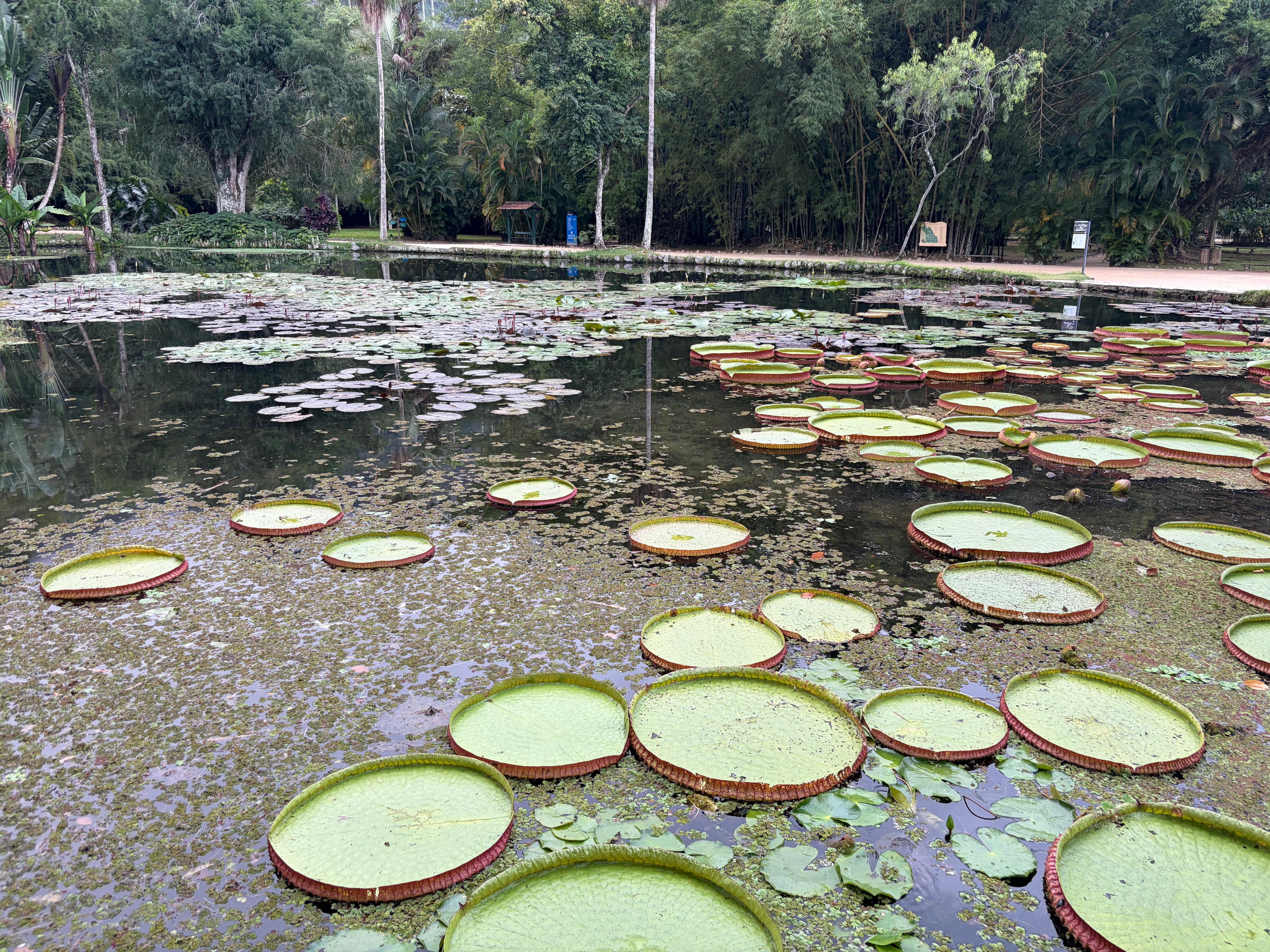
The next day I went to the Botanical Garden with them. More people joined too, including Rohit and Robert. The ticket was around R$80. The garden was fine, but the best part was still the people.
At night I met Connor, Summer, Nicholas, and a few others. Everyone was interesting in a different way. One thing that felt very new to me was how common gap years were for Europeans. Nicholas was from Germany, around twenty, and was on a two-year gap after high school. Sophia was working as a bartender to earn enough money to travel. Two women from England I met were also doing gap-year travel. Coming from India, this felt like a completely different life path.
I also heard a phone-snatching story from Nicholas. He was waiting for an Uber in Ilha Grande around 9 PM, opened his phone to check the remaining time, someone pushed him and stole it, and the Uber never came. Maybe the Uber was unrelated, maybe not, but the lesson was clear. Rio and nearby tourist routes are beautiful, but you cannot be careless with your phone, especially at night.
Leaving Rio
The next morning I woke up, packed, and left the hostel around 11. Before leaving, I did one last round near Ipanema and bought a few souvenirs.
The return journey was again long, with all window seats, all long flights, and almost thirty hours of travel. Rajeev sir and I did not have the same first flight, but we connected later.
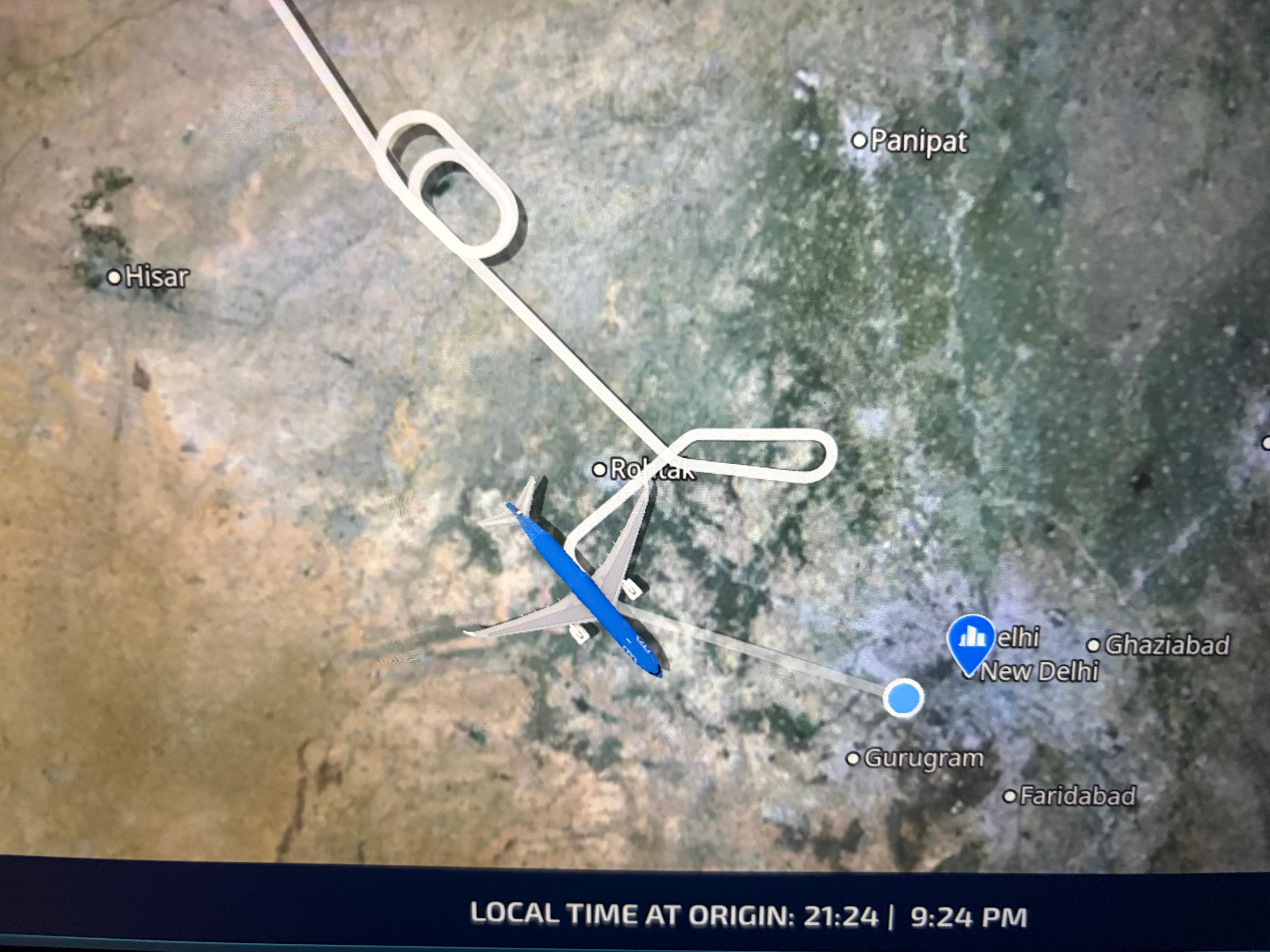
Reaching Delhi airport felt like a fresh breeze. I had breakfast at Haldiram's and then took a cab to Kashmere Gate, barely catching the bus back to NIT Jalandhar.
Things I Wish I Knew Before Going
These are not universal truths, just things that would have helped me.
- ▸Turn on international roaming and SMS before leaving India. Card OTPs matter. Without them, even Uber can become difficult.
- ▸Carry some small cash in local currency if possible. Big notes are hard to break, and small transport payments become awkward.
- ▸Do not depend only on Uber. Rio is large, and repeated Uber rides from Ipanema to Riocentro become expensive.
- ▸Learn the public-transport payment system early. Rio uses Jaé for municipal transport, and BRT/VLT style systems may not accept cash. Normal bus payment rules were changing while I was there, so check the latest official guidance before your trip.
- ▸Use Moovit or a similar app for buses, but still verify direction manually. The same bus number in the wrong direction can waste a lot of time.
- ▸Wave at buses clearly. In my experience, they do not always stop automatically.
- ▸Learn basic Portuguese food words.
frangois chicken,ovois egg,queijois cheese,porcois pork,presuntois ham, andcarneoften means meat or beef depending on context. - ▸If you avoid beef or pork, plan meals ahead. Chicken and egg options exist, but you may need to search.
- ▸Rio gets dark early around April. Treat sunset as a real planning boundary.
- ▸Keep your phone secure in public, especially while waiting for rides or standing near roads at night.
- ▸For tourist places, book official tickets when possible. Christ the Redeemer and Sugarloaf are worth planning properly.
- ▸Conference travel is not only about talks and posters. The people you meet in airports, buses, hostels, and food lines become part of the experience.
Useful Links
Final Thought
This trip was chaotic, expensive in unexpected places, confusing because of language and transport, and tiring because of the long flights. But it was also one of the most valuable experiences I have had.
I went from forgetting my poster in India to presenting at ICLR in Brazil. I learned how to move around Rio by making mistakes. I met researchers, students, booth people, travelers, and strangers who helped me when they did not have to. I saw Christ the Redeemer, watched the sunset from Sugarloaf, and wrote NITJ on a board at one of the biggest ML conferences in the world.
That combination is hard to summarize cleanly. Maybe that is why the raw notes were messy in the first place.